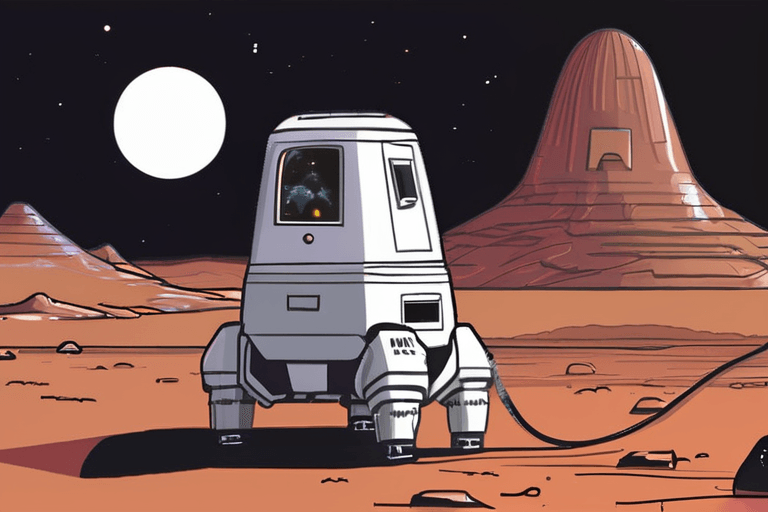
NASA will no longer bring Martian rock samples back to Earth, according to a recent announcement that has sparked debate within the scientific community about the potential loss of invaluable research opportunities. The decision, detailed in the Nature Briefing Podcast on January 16, 2026, means that samples collected by the Perseverance rover, intended for study in terrestrial labs, will remain on Mars indefinitely.
The primary reason cited for this change of plans is budgetary constraints. The Mars Sample Return (MSR) mission, a joint effort between NASA and the European Space Agency (ESA), faced escalating costs and significant delays. "The original timeline and budget were simply unsustainable," stated a NASA spokesperson during a press conference. "We had to make a difficult choice to prioritize other critical missions."
Scientists express concern over the implications of this decision. The ability to analyze Martian rocks with sophisticated Earth-based equipment is considered crucial for understanding the planet's geological history, potential for past or present life, and the evolution of the solar system. "These samples represent a unique opportunity to unlock some of Mars' deepest secrets," explained Dr. Emily Carter, a planetary scientist at the California Institute of Technology. "Without them, our understanding will remain incomplete."
In related news, research published in Nature sheds light on the genetic basis for the floppy ears seen in many dog breeds. The study identifies specific genes responsible for the development of cartilage and connective tissue in the ears, explaining why some dogs have erect ears while others have droopy ones. Researchers analyzed the genomes of hundreds of dogs, comparing breeds with different ear types. "We found a strong correlation between certain gene variants and the degree of ear floppiness," said Dr. Sarah Jones, lead author of the study. "This provides valuable insights into the domestication process and the genetic changes that have shaped the diverse characteristics of dogs."
The study highlights the power of genomic analysis in understanding the evolution of physical traits. By identifying the genes responsible for specific characteristics, scientists can gain a deeper understanding of the mechanisms that drive biological diversity. This research has implications for understanding not only dog breeds but also the genetic basis of physical traits in other animals, including humans.
While the Mars sample return mission faces an uncertain future, NASA continues to explore alternative strategies for studying the Red Planet. These include deploying advanced robotic instruments to Mars and developing new techniques for analyzing data remotely. The agency also emphasizes its commitment to international collaboration in space exploration, working with partners to achieve shared scientific goals. The decision to leave the Martian samples on Mars represents a setback for planetary science, but it also underscores the challenges and complexities of deep-space exploration.



















Discussion
Join the conversation
Be the first to comment