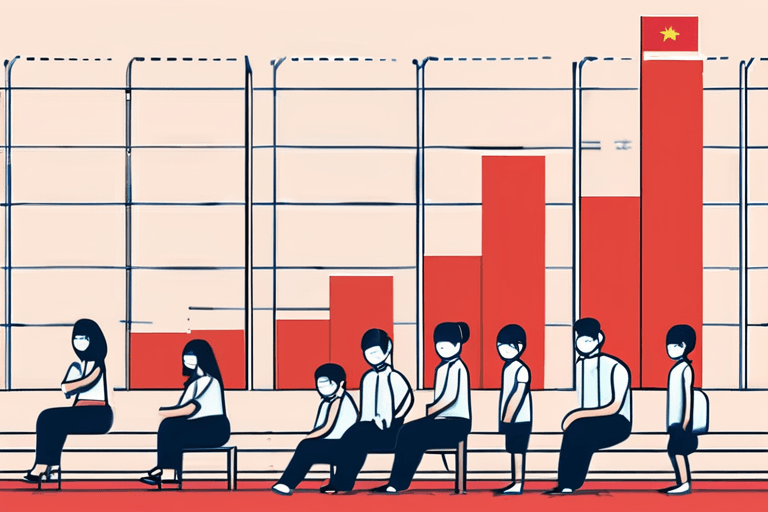
The birth rate dropped to 5.63 per 1,000 people, the lowest since the Communist Party's rise to power in 1949, while the death rate increased to 8.04 per 1,000 people, the highest since 1968. These figures highlight the growing demographic challenges facing China, including an aging population and a shrinking workforce.
In response to these challenges, Beijing has implemented various policies to encourage young people to marry and have children. In 2016, the government abandoned its long-standing one-child policy, replacing it with a two-child limit. When this change failed to produce a significant increase in births, authorities further relaxed the policy in 2021, allowing couples to have up to three children.
More recently, China has introduced financial incentives for parents, offering 3,600 yuan ($375; 500) per child under the age of three. Several provinces have also implemented their own baby bonuses, including additional financial support and extended maternity leave. These measures reflect the government's concern about the potential economic and social consequences of a declining population.
The demographic shift in China has significant implications for the nation's economy. A shrinking workforce could lead to labor shortages and slower economic growth. An aging population also places increased pressure on the country's social security and healthcare systems. The long-term effects of these demographic trends remain to be seen, but they are likely to shape China's future for decades to come.














Discussion
Join the conversation
Be the first to comment