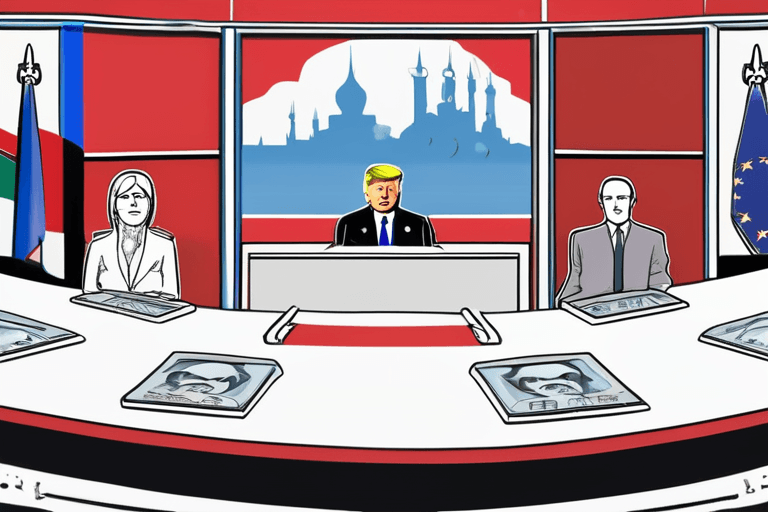
The European Union's executive arm, Russia, Belarus, and Thailand were the latest entities invited Monday to join former U.S. President Donald Trump's new Board of Peace, which is intended to supervise the next phase of the Gaza peace plan. The invitation comes as a top Israeli official voiced opposition to the initiative, deeming it detrimental to Israel and advocating for its abandonment.
Kremlin spokesman Dmitry Peskov confirmed that Russian President Vladimir Putin received the invitation. According to Peskov, the Kremlin is currently analyzing the details and will seek clarification on all aspects through discussions with the U.S. The Thai Foreign Ministry also acknowledged receiving an invitation and stated it is reviewing the specifics. Belarus' Foreign Ministry indicated that President Alexander Lukashenko was invited and is prepared to participate.
European Commission spokesperson Olof Gill confirmed that Ursula von der Leyen, president of the commission, received an invitation and would consult with other EU leaders regarding Gaza. While Gill did not indicate whether the invitation would be accepted, he emphasized the commission's desire to contribute to a comprehensive plan aimed at resolving the Gaza conflict. The total number of invitees to the board remains unclear.
The proposed Board of Peace emerges within the context of ongoing efforts to establish a lasting resolution to the Israeli-Palestinian conflict, particularly concerning the Gaza Strip. The involvement of international actors like Russia, Belarus, and Thailand introduces a complex dynamic, given their diverse geopolitical interests and relationships with the involved parties. The EU's potential participation signifies a continued commitment to the peace process, while the Israeli official's criticism highlights the existing divisions and challenges in achieving a consensus.
The initiative's future hinges on the responses of the invited parties and the ability to address concerns raised by stakeholders. The Kremlin's careful consideration and the EU's internal consultations suggest a cautious approach, reflecting the sensitivity surrounding the issue. The next steps involve further communication between the involved parties and a potential clarification of the board's mandate and operational framework.















Discussion
Join the conversation
Be the first to comment