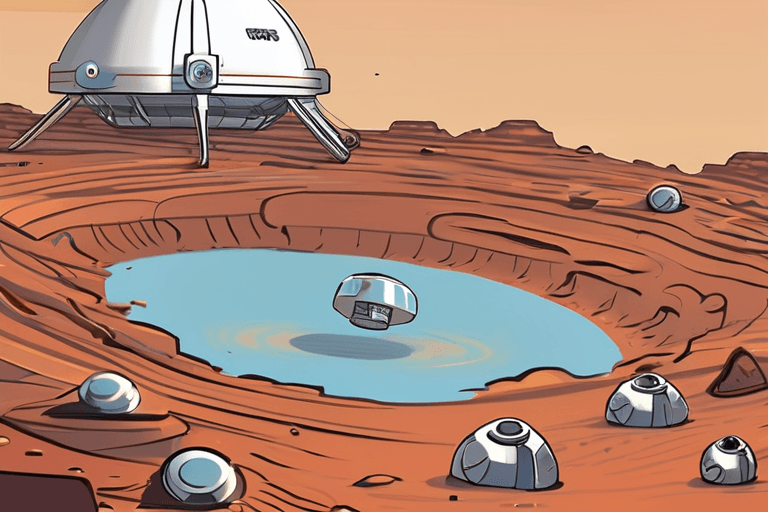
NASA will no longer bring Martian rock samples back to Earth, a decision that has significant implications for planetary science. The change in plans, detailed in the Nature Briefing Podcast on January 16, 2026, means that certain scientific analyses that could only be performed on Earth will now be impossible.
The decision stems from budgetary constraints and revised mission priorities, according to sources within NASA. The original Mars Sample Return mission, a joint effort with the European Space Agency (ESA), aimed to collect and return samples of Martian rock and soil to Earth for in-depth analysis. Scientists hoped these samples would provide crucial insights into the planet's geological history, potential for past or present life, and the overall evolution of the solar system.
"The inability to analyze these samples directly on Earth represents a significant loss for the scientific community," stated Dr. Emily Carter, a planetary geologist at the California Institute of Technology, in an interview following the announcement. "Certain high-precision analyses, such as isotopic dating and detailed mineralogical studies, are extremely difficult, if not impossible, to conduct remotely on Mars."
In related news, the podcast also explored the genetic basis for floppy ears in dogs. Research published in Nature has identified specific genes responsible for the characteristic droopy ears seen in many dog breeds. The study, led by Dr. Sarah Jones at the University of Edinburgh, analyzed the genomes of various dog breeds, identifying key genetic markers associated with ear morphology.
"Our findings suggest that a relatively small number of genes play a significant role in determining ear shape in dogs," Dr. Jones explained. "This provides valuable insights into the genetic mechanisms underlying domestication and the evolution of specific traits in different breeds."
The research has implications for understanding the genetic basis of other physical traits in animals and potentially in humans. Furthermore, it highlights the power of genomic analysis in unraveling the complex interplay between genes and physical characteristics.
The change in NASA's Mars Sample Return mission reflects a broader trend of re-evaluating space exploration priorities in light of budgetary realities. While robotic missions to Mars will continue, the focus will likely shift towards in-situ analysis and remote sensing techniques. The future of the Mars Sample Return mission remains uncertain, with NASA exploring alternative strategies for maximizing scientific return within the new constraints.














Discussion
Join the conversation
Be the first to comment