President Trump attended the World Economic Forum in Davos this year, amidst escalating tensions between the U.S. and several European nations over the future of Greenland. The forum, held January 19, 2026, brought together global leaders to discuss pressing issues, including the ongoing conflicts in Ukraine and Gaza.
The Greenland dispute, which has been simmering for several years, resurfaced recently after the U.S. proposed a joint development initiative for the island's rare earth mineral resources. Several European countries, particularly Denmark, which currently governs Greenland, view the proposal as an infringement on their sovereignty and economic interests. "We believe that Greenland's resources should be developed in a way that benefits the Greenlandic people first and foremost," stated Danish Prime Minister Mette Frederiksen in a press conference last week.
The U.S. argues that its involvement is crucial for ensuring responsible and sustainable resource extraction, and that it is also vital for countering China's growing influence in the Arctic region. "Our goal is to partner with Greenland to develop its economy and secure critical supply chains," a White House spokesperson said. "We believe this can be done in a way that respects Greenland's autonomy and benefits all parties involved."
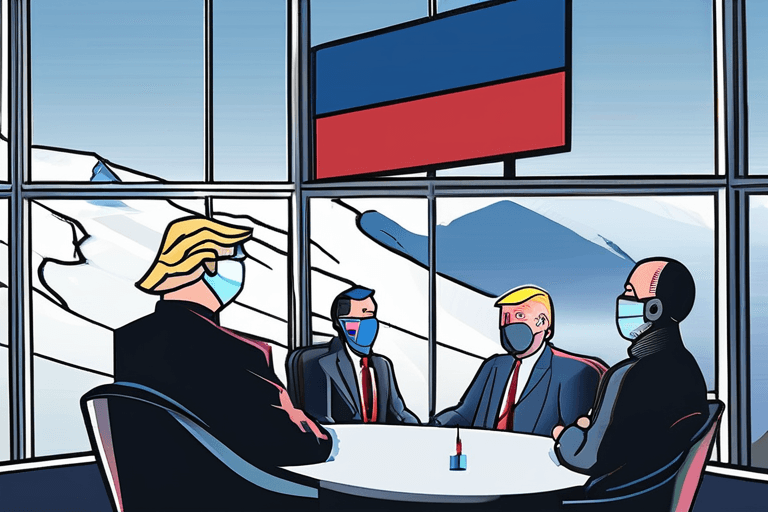
The World Economic Forum provided a platform for informal discussions between Trump and European leaders on the Greenland issue. While no formal agreements were reached, sources indicate that the discussions were productive and that both sides expressed a willingness to continue negotiations.
The tensions surrounding Greenland highlight the increasing geopolitical importance of the Arctic, as climate change makes the region more accessible and its resources more valuable. The melting ice caps are revealing vast reserves of minerals, oil, and gas, attracting the attention of major global powers. The development of these resources raises complex questions about environmental protection, indigenous rights, and international cooperation.
The situation is further complicated by the increasing use of Artificial Intelligence (AI) in resource exploration and extraction. AI algorithms are being used to analyze geological data, identify potential mining sites, and optimize extraction processes. This technology has the potential to significantly increase the efficiency and profitability of resource development, but it also raises concerns about job displacement and environmental risks.
"AI is a double-edged sword," said Klaus Schwab, founder and executive chairman of the World Economic Forum, during a panel discussion on the future of the Arctic. "It can help us to develop resources more sustainably, but it also requires careful regulation to ensure that it is used responsibly and ethically."
Looking ahead, the future of Greenland will likely depend on the ability of the U.S., Europe, and Greenland itself to find common ground and develop a sustainable and equitable framework for resource development. The ongoing negotiations are expected to continue in the coming months, with the aim of reaching a comprehensive agreement that addresses the concerns of all parties involved.

















Discussion
Join the conversation
Be the first to comment