Is your morning cup tasting a little…off? Like it's been brewed in a swamp rather than your trusty Keurig? You're not alone. For many households, the pod coffee maker is a daily workhorse, churning out caffeine fixes multiple times a day. But all that brewing takes a toll, leading to a buildup of gunk and scale that can sabotage your coffee's flavor and shorten your machine's lifespan.
The good news is, keeping your Keurig clean isn't a Herculean task. With a little know-how and a consistent routine, you can banish the bitterness and keep your coffee tasting fresh. This isn't just about taste, though. Regular cleaning is an investment in your machine's longevity, preventing costly repairs or replacements down the line.
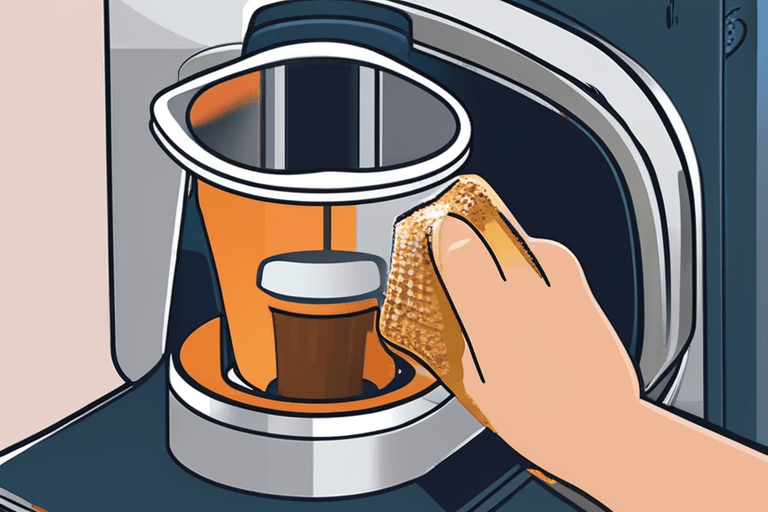
Daily maintenance is surprisingly simple. Think of it as a quick tidy-up after each brewing session. A damp cloth is your best friend for wiping down the exterior housing, removing any stray coffee splatters or fingerprints. The K-Cup holder and needle also deserve attention. Loose coffee grounds can accumulate, so a quick brush or even a vacuum cleaner with a small attachment can work wonders. Just be extra cautious around the needle, as it's sharp.
Some Keurig models come equipped with a dedicated needle cleaning tool. This handy gadget allows you to gently clear any blockages from both the top and bottom of the needle. If you don't have the official tool, some users have found success using a straightened paper clip as a substitute. The key is to be gentle and avoid forcing anything that might damage the needle.
Beyond the daily wipe-downs, a deeper clean is essential for tackling stubborn scale and mineral deposits. These deposits, left behind by hard water, can not only affect the taste of your coffee but also clog the machine's internal components. Fortunately, descaling is a straightforward process that can be done with readily available household ingredients.
Many Keurig owners swear by white vinegar as a natural descaling solution. Simply fill the water reservoir with equal parts white vinegar and water, then run a full brewing cycle without a K-Cup. Repeat this process two or three times, followed by several cycles with fresh water to rinse away any lingering vinegar taste. Alternatively, you can purchase a dedicated descaling solution specifically designed for Keurig machines. These solutions often contain citric acid, which is effective at breaking down mineral deposits.
Regardless of the method you choose, regular descaling is crucial for maintaining your Keurig's performance. Aim to descale your machine every three to six months, depending on the hardness of your water and how frequently you use it. A little preventative maintenance can go a long way in ensuring that your Keurig continues to deliver delicious, flavorful coffee for years to come.

















Discussion
Join the conversation
Be the first to comment