Elon Musk recently predicted a radical shift in the labor market, suggesting that within the next 10 to 20 years, work could become optional, and the concept of money might even become irrelevant. He attributed this potential transformation to the rapid advancements in artificial intelligence and robotics.
Musk, speaking at the U.S.-Saudi Investment Forum in Washington, likened the future of work to a voluntary activity, similar to playing sports or tending a vegetable garden. He explained that while individuals could choose to engage in labor, the necessity for it would diminish as AI-powered robots take over many tasks. He used the analogy of buying vegetables at a store versus growing them at home, highlighting that while the latter is more laborious, some people still choose it for the enjoyment it provides.
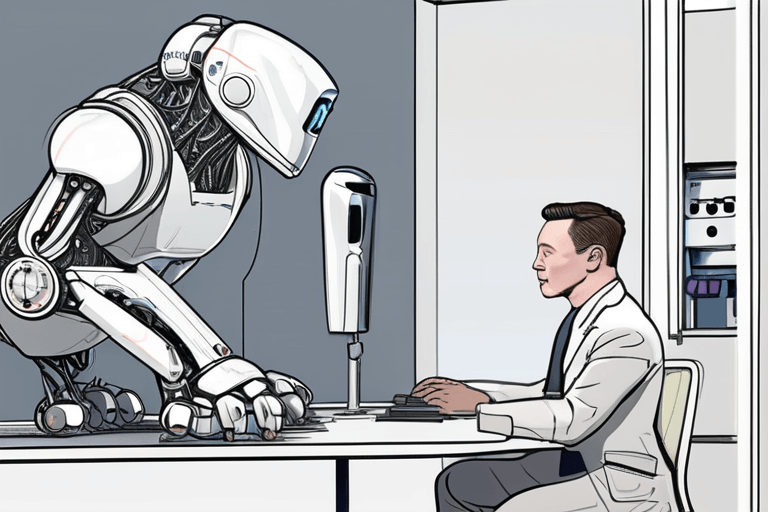
Musk's vision hinges on the proliferation of robots in the workforce, leading to a significant increase in productivity. This prediction comes as Musk is actively working to expand Tesla beyond electric vehicles, focusing on integrating his various business interests into a cohesive vision of an AI and robotics-driven future. A key component of this vision is Tesla's Optimus robot, which Musk anticipates will eventually account for 80% of Tesla's value, despite ongoing production delays.
The implications of such a shift are far-reaching. If work becomes optional, the current economic models based on employment and wages would need to be re-evaluated. The concept of universal basic income, where governments provide citizens with a regular income regardless of employment status, could gain traction as a potential solution to address income inequality and ensure basic needs are met. Furthermore, the societal impact of widespread automation could lead to a redefinition of purpose and value for individuals, potentially shifting focus towards leisure, creativity, and personal development.
Musk's perspective aligns with the broader trend of increasing automation across various industries. AI-powered systems are already being implemented in manufacturing, logistics, customer service, and even creative fields. While these advancements offer the potential for increased efficiency and productivity, they also raise concerns about job displacement and the need for workforce retraining and adaptation. The development of sophisticated AI models, such as large language models and generative AI, further accelerates this trend, enabling machines to perform tasks that were previously considered exclusively human.
Looking ahead, the realization of Musk's vision depends on several factors, including the continued development and deployment of advanced robotics, the ethical considerations surrounding AI, and the societal adaptation to a world where work is no longer a necessity. While the timeline remains uncertain, the potential for AI and robotics to fundamentally reshape the labor market and the very fabric of society is undeniable.

















Discussion
Join the conversation
Be the first to comment