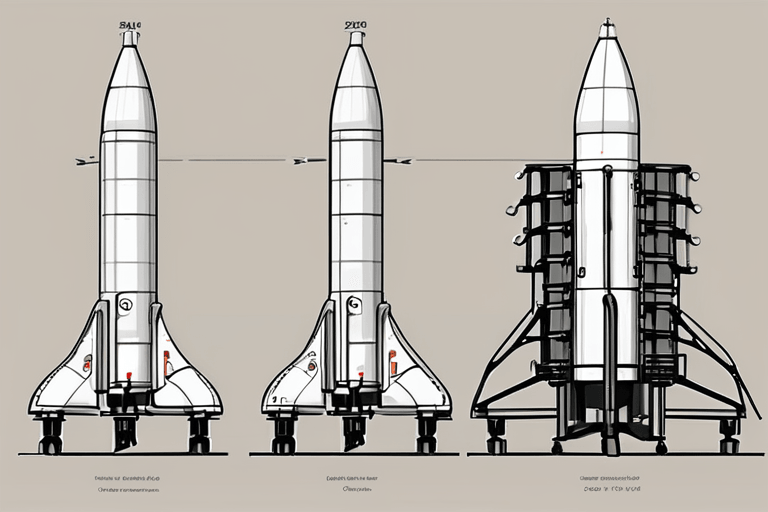
Preparations for the Artemis II mission, the first crewed lunar mission in over half a century, advanced significantly this weekend as the rocket was transported to its launch pad at Kennedy Space Center in Florida. The rocket, moving at a top speed of 1 mph, completed the four-mile journey from the Vehicle Assembly Building to Launch Complex 39B over a 12-hour period.
The Orion capsule atop the rocket is designed to reach speeds exceeding 25,000 mph upon reentry into Earth's atmosphere at the end of its planned near-10-day mission around the Moon. NASA Administrator Jared Isaacman emphasized the significance of the mission, stating, "This is the start of a very long journey. We ended our last human exploration of the moon on Apollo 17."
The Artemis II mission is poised to establish several human spaceflight records. The crew, consisting of astronauts Reid Wiseman, Victor Glover, Christina Koch, and Jeremy Hansen, will venture farther from Earth than any previous human travelers. While this mission will not include a lunar landing, that milestone is reserved for a subsequent mission within NASA's Artemis program.
The Artemis program, in general, represents a significant step in space exploration, with implications extending beyond scientific discovery. The program leverages advancements in artificial intelligence (AI) for various aspects of mission planning, spacecraft navigation, and data analysis. AI algorithms are used to optimize flight trajectories, manage spacecraft systems autonomously, and process the vast amounts of data generated during spaceflight.
The use of AI in space exploration raises important societal considerations. As AI systems become more sophisticated and autonomous, questions arise regarding decision-making authority and the potential for unintended consequences. Ensuring the ethical and responsible development and deployment of AI in space exploration is crucial for maximizing its benefits while mitigating potential risks.
Currently, engineers and technicians are conducting final checks and preparations on the Artemis II rocket at Launch Complex 39B. The launch is scheduled for no earlier than November 2024, pending the completion of these pre-flight activities. The mission will pave the way for future lunar landings and, ultimately, human exploration of Mars.


















Discussion
Join the conversation
Be the first to comment