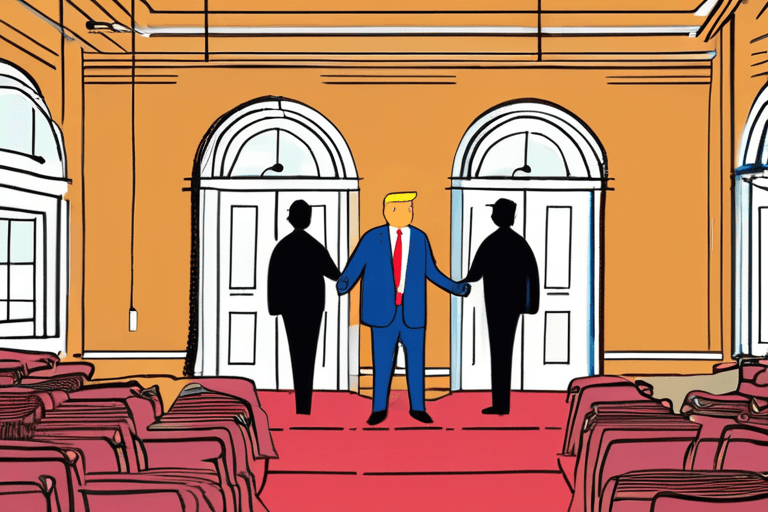
European leaders are signaling a shift in their approach to U.S. President Donald Trump following his renewed insistence that the United States "has to have" Greenland for national security reasons, despite the territory being a semi-autonomous part of Denmark, a member of both the EU and NATO. Trump predicted European leaders would not "push back too much," but this stance is being challenged as leaders prepare to meet him at the World Economic Forum (WEF) on Wednesday.
The U.S. president is reportedly pressuring Denmark's allies within the EU and NATO to relinquish control of Greenland to the U.S., threatening punitive taxes on exports to the United States if they refuse. This proposition presents a significant threat to European economies, already facing economic challenges, particularly those heavily reliant on exports to the U.S., such as Germany's automotive industry and Italy's luxury goods market.
Germany's Finance Minister, following an emergency meeting with his French counterpart ahead of the WEF, stated, "We will not allow ourselves to be blackmailed." This statement reflects a growing sentiment among European leaders to adopt a more assertive stance against what they perceive as coercive tactics from the Trump administration.
Greenland's strategic importance stems from its location and potential resource wealth. The U.S. has historically maintained a military presence in Greenland, notably through the Thule Air Base, a critical component of its ballistic missile early warning system. Increased geopolitical competition in the Arctic, driven by climate change and the opening of new shipping routes, has further heightened interest in the region.
The potential imposition of tariffs on European exports to the U.S. could have far-reaching consequences. Industries like the German automotive sector, which exports a significant portion of its production to the U.S., would face increased costs, potentially impacting profitability and employment. Similarly, Italy's luxury goods market, another key exporter to the U.S., could experience a decline in sales.
The European Union operates as a customs union, meaning that member states have eliminated tariffs on trade with each other and have a common external tariff policy. This structure allows the EU to negotiate trade agreements as a bloc, giving it greater leverage in international trade negotiations. However, the threat of U.S. tariffs could undermine this unity and create divisions among member states.
The situation remains fluid as European leaders prepare for the WEF, where they are expected to address the issue directly with President Trump. The outcome of these discussions will likely determine the future trajectory of transatlantic relations and the extent to which Europe is willing to challenge U.S. policy.
















Discussion
Join the conversation
Be the first to comment