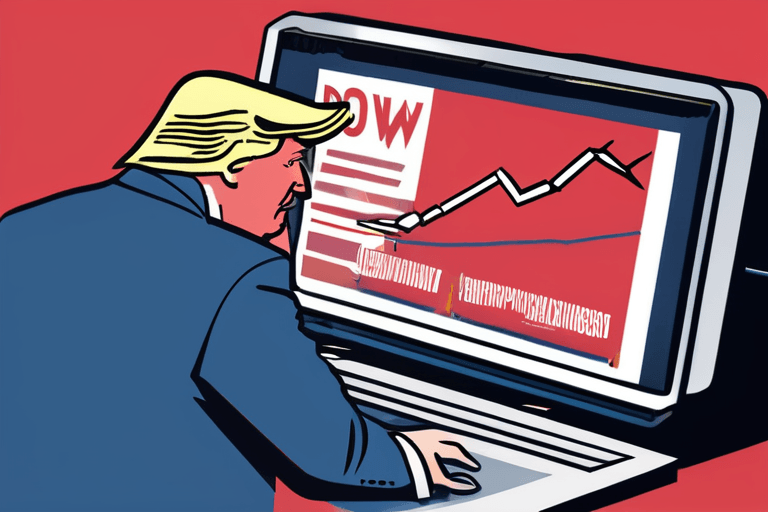
Dow Jones Industrial Average futures plummeted 401 points, or 0.81%, late Monday, signaling a turbulent start to the week for U.S. markets following President Trump's announcement of tariffs on NATO allies. S&P 500 futures were down 0.91%, while Nasdaq futures took an even steeper dive, sinking 1.13%. The sell-off followed similar trends in European and Asian markets, where stocks largely retreated and the dollar's safe-haven status came into question.
The catalyst for the market unease was Trump's announcement on Saturday that a 10% tariff would be imposed on goods from Denmark, Norway, Sweden, France, Germany, the United Kingdom, the Netherlands, and Finland, effective February 1. The tariff is slated to increase to 25% on June 1, pending a deal for the "Complete and Total" purchase of Greenland. The move comes after these nations sent troops to Greenland for training exercises at Denmark's request.
The geopolitical implications of these tariffs are significant, potentially jeopardizing transatlantic trade relations. While U.S. markets were closed Monday for Martin Luther King Jr. Day, the futures market reaction indicates investor concern about the potential for a protracted trade conflict. The tariffs, ostensibly linked to Greenland, are also rumored to stem from Trump's frustration at not receiving the Nobel Peace Prize, according to a message reportedly sent to European officials.
The impact on specific companies and industries remains to be seen, but sectors heavily reliant on trade with Europe, such as automotive, aerospace, and agriculture, are likely to face increased pressure. Companies with significant operations or supply chains in the affected countries could experience reduced profitability and increased costs.
Looking ahead, Wall Street is hoping for de-escalation at the upcoming World Economic Forum in Davos. However, the situation remains highly volatile, and the market's trajectory will depend heavily on the tone and outcome of trade negotiations between the U.S. and its NATO allies. Investors will be closely monitoring any statements from Davos for signs of a potential resolution or further escalation of the trade dispute.















Discussion
Join the conversation
Be the first to comment