The flashing lights of Milan Men's Fashion Week weren't just illuminating impeccably tailored suits and avant-garde designs; they were reflecting a growing trend: the increasing convergence of celebrity culture and artificial intelligence. This year, as Hudson Williams strutted down the DSQUARED2 runway in denim and snow boots, and Colman Domingo charmed the Ralph Lauren front row, AI was quietly working behind the scenes, influencing everything from trend forecasting to personalized marketing.
Milan Men's Fashion Week, a bi-annual event, has long been a barometer of style, setting the tone for the upcoming seasons. But in recent years, the fashion industry has undergone a seismic shift, driven by the rapid advancements in AI. These technologies are no longer confined to the realms of science fiction; they are actively shaping the creative process, influencing consumer behavior, and even impacting the very definition of what it means to be fashionable.
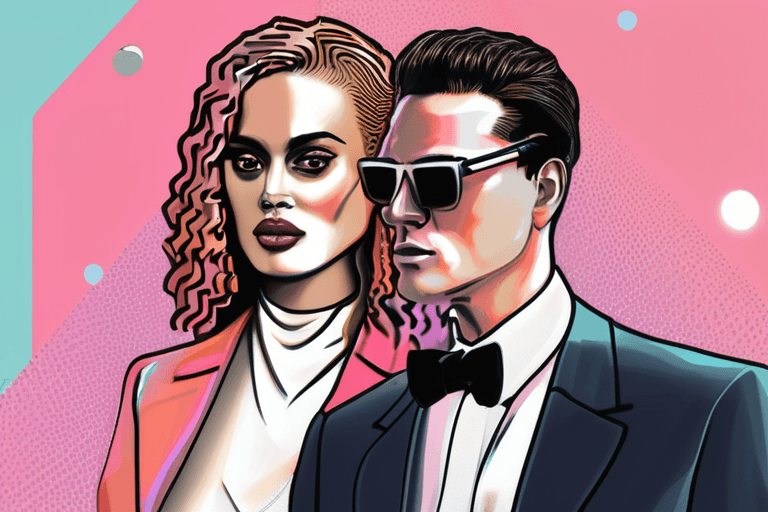
The presence of celebrities like Ricky Martin, Nicholas Hoult, and the aforementioned Hudson Williams at Milan Men's Fashion Week is more than just a photo opportunity. These individuals, with their massive social media followings, act as powerful influencers, amplifying the reach of brands and trends. AI algorithms analyze their style choices, predict which items will resonate with consumers, and personalize marketing campaigns accordingly. Imagine an AI system that not only identifies Hudson Williams wearing a specific brand but also predicts the likelihood of his fans purchasing similar items, tailoring advertisements to maximize impact.
"AI is revolutionizing the fashion industry in ways we never thought possible," says Dr. Anya Sharma, a leading AI researcher at the Fashion Institute of Technology. "From predicting trends to optimizing supply chains, AI is becoming an indispensable tool for brands looking to stay ahead of the curve." Dr. Sharma explains that AI algorithms can analyze vast amounts of data, including social media posts, runway shows, and sales figures, to identify emerging trends with remarkable accuracy. This allows designers to create collections that are more likely to resonate with consumers, reducing waste and increasing profitability.
The implications of AI in fashion extend far beyond trend forecasting. AI-powered virtual stylists are already helping consumers find the perfect outfits, while AI-driven manufacturing processes are enabling brands to produce clothing more efficiently and sustainably. However, the rise of AI also raises important ethical considerations. Concerns about data privacy, algorithmic bias, and the potential displacement of human workers are becoming increasingly prevalent.
As Colman Domingo engaged in conversation with Henry Golding and Noah Schnapp at Ralph Lauren, one could ponder the future of fashion events. Will AI eventually replace human models with hyper-realistic avatars? Will personalized AI stylists render traditional fashion advice obsolete? While these scenarios may seem far-fetched, the rapid pace of technological advancement suggests that they are not entirely implausible. The challenge lies in harnessing the power of AI for good, ensuring that it enhances creativity, promotes sustainability, and empowers individuals, rather than exacerbating existing inequalities. Milan Men's Fashion Week, with its blend of celebrity glamour and cutting-edge technology, offers a glimpse into this complex and rapidly evolving future.
















Discussion
Join the conversation
Be the first to comment