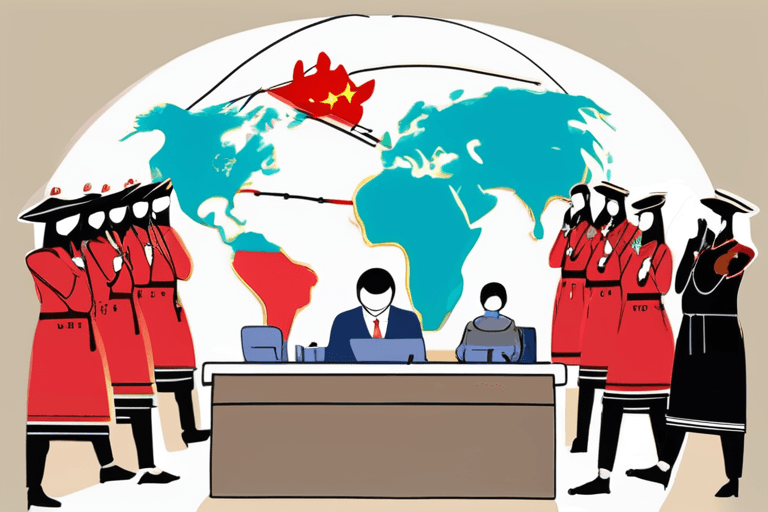
China significantly expanded its global influence in 2025 through the export of its cultural products, marking a shift in its approach to international power dynamics. The surge in popularity of Chinese movies, video games, and toys abroad coincided with a period of heightened economic tension between China and the United States.
Despite the Trump administration's efforts to exert pressure on China through tariffs and export restrictions, China's economy thrived, fueled in part by the global appeal of its cultural exports. Don Weinland, a China business and finance editor for The Economist in Shanghai, noted that this newfound "soft power" played a crucial role in China's economic success.
The global phenomenon of the Labubu, a popular toy, along with the success of the Chinese movie "Nhe Zha 2" and the video game "Black Myth: Wukong," demonstrated China's ability to capture international audiences. This cultural expansion occurred as the United States sought to limit China's access to key technologies, particularly in the semiconductor industry.
The rise of Chinese soft power reflects a broader trend of nations leveraging cultural influence to achieve geopolitical objectives. Historically, countries like the United States have utilized their cultural exports, such as Hollywood movies and popular music, to promote their values and interests abroad. China's recent success in this arena suggests a growing sophistication in its international strategy.
The long-term impact of China's cultural expansion on its relationship with the United States and other global powers remains to be seen. However, the events of 2025 indicate a significant shift in the dynamics of international influence, with China increasingly wielding its cultural assets as a tool of economic and political power.



















Discussion
Join the conversation
Be the first to comment