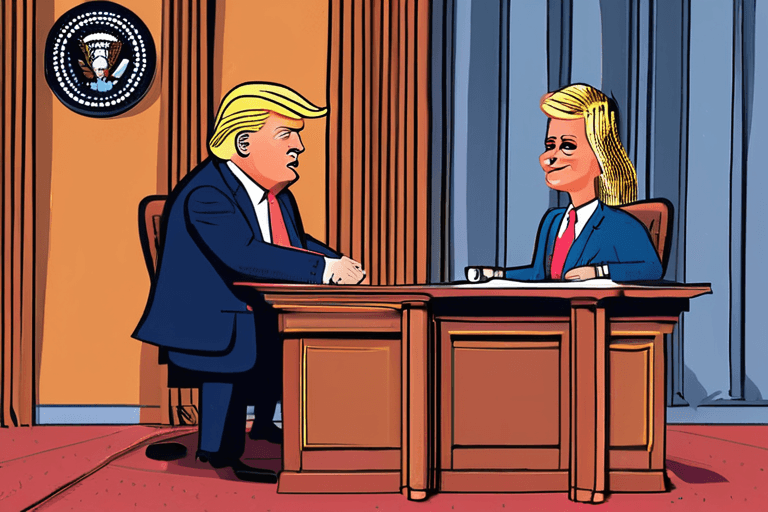
Lights, camera, potential chaos! Imagine a world where Stephen Colbert has to share his desk with Marjorie Taylor Greene, or Jimmy Fallon is forced to trade jokes with, say, a cardboard cutout of a certain former president. Sounds like a dystopian comedy sketch, right? Well, the Trump-era FCC, led by staunch supporter Brendan Carr, might just be trying to make that a reality.
The FCC has issued a public notice, essentially a shot across the bow, warning late-night and daytime talk shows that their exemption from the equal-time rule might be in jeopardy. For those not fluent in FCC-speak, the equal-time rule mandates that broadcast stations provide equal airtime to all legally qualified political candidates. Traditionally, news and bona fide news interview programs have been exempt. But the FCC, under Carr's leadership, seems to be questioning whether these shows still qualify.
This isn't just about dry regulatory policy; it's about the very fabric of late-night television, a cultural institution that has shaped political discourse for decades. Think back to Johnny Carson's monologues skewering presidents, or Jon Stewart's evisceration of political hypocrisy. These shows aren't just about laughs; they're about holding power accountable, often with a comedic edge.
The potential implications are enormous. If enforced strictly, the equal-time rule could force shows to offer equal airtime to every fringe candidate who throws their hat in the ring. Imagine a late-night landscape dominated by candidates you've never heard of, all vying for a few precious minutes after the monologue. It could effectively neuter the political commentary that has become a staple of these programs.
"This is a clear attempt to chill speech," says media analyst Sarah Miller. "The FCC is weaponizing regulations to silence voices they disagree with. It's a dangerous precedent."
Carr's history suggests this isn't an idle threat. He previously pressured ABC to suspend Jimmy Kimmel and even threatened "The View" with the equal-time rule. This latest move feels like a continuation of that pattern, a concerted effort to rein in what the Trump administration perceived as liberal bias in the media.
The FCC argues that broadcast stations are using a valuable public resource – the broadcast spectrum – and therefore have a responsibility to be fair. But critics argue that this is a thinly veiled attempt to control content and silence dissenting voices.
The question now is: what happens next? Will late-night hosts tone down their political commentary? Will networks cave to the pressure? Or will they fight back, arguing that their shows are legitimate forms of political commentary deserving of protection?
One thing is certain: the stakes are high. This isn't just about jokes; it's about the future of political discourse on television. And whether you're a fan of late-night laughs or a political junkie, this is a story worth watching. The punchline, it seems, is still being written.















Discussion
Join the conversation
Be the first to comment