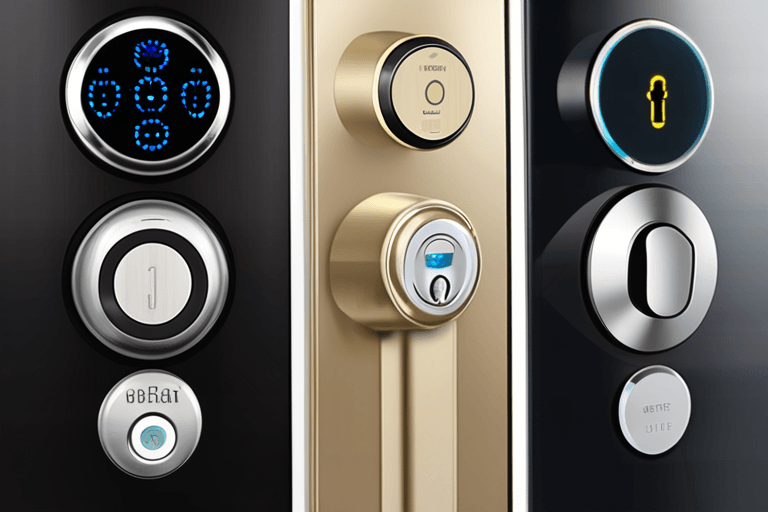
Smart locks are increasingly offering homeowners multiple convenient entry options, such as passcodes, fingerprint scanning, and smartphone app control, addressing common concerns about key management and security. These devices provide alternatives to traditional keys, allowing users to grant access to family and friends without the need for physical key copies.
The rise of smart locks reflects a growing demand for enhanced home security and convenience. These systems typically include a keypad for entering a numerical code, a fingerprint scanner for biometric authentication, and a mobile app for remote control and monitoring. Many models also offer auto-lock features, ensuring doors are secured automatically after closing.
However, the compatibility of smart locks with existing door hardware can vary, requiring careful consideration during selection. Factors such as door thickness, lock type (deadbolt, lever, etc.), and existing security systems can influence the choice of a suitable smart lock.
Aqara's Smart Lock U50, priced at $125, is one example of a full-featured smart lock that incorporates a built-in keypad. The U50 is designed to be user-friendly and offers a balance of features and affordability.
The installation of a smart lock does not necessarily require homeowners to discard their traditional keys. Most systems are designed to work in conjunction with existing key-based entry methods, providing a backup option in case of technological issues or personal preference.
The smart lock industry is continuing to evolve, with manufacturers focusing on improving security, ease of use, and integration with other smart home devices. As technology advances, smart locks are expected to become even more prevalent in residential and commercial settings.




















Discussion
Join the conversation
Be the first to comment