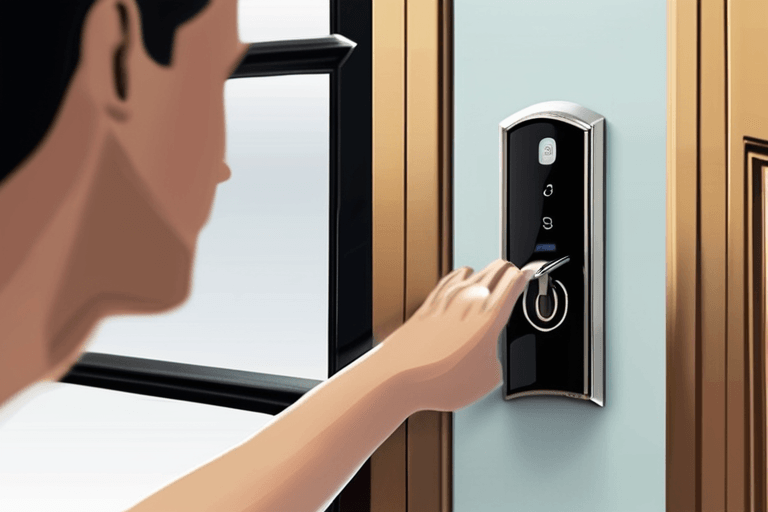
Smart locks are increasingly popular among homeowners seeking enhanced convenience and security, offering keyless entry via keypads, fingerprint scanners, and smartphone apps. These devices address common frustrations, such as lost keys and uncertainty about whether a door is locked, particularly in larger homes where checking every entry point can be burdensome.
The primary advantage of smart locks lies in their multiple entry methods. Users can unlock doors using a numerical passcode, biometric fingerprint scan, or a dedicated mobile application. This eliminates the need for physical keys, although most smart lock systems still allow for traditional key access as a backup. Furthermore, smart locks facilitate easy access sharing with family and friends through unique codes, negating the need for physical key duplication. Many models also feature an auto-lock function, ensuring doors are secured automatically upon closing.
However, the smart lock market is diverse, and compatibility varies depending on door type and existing hardware. Extensive testing has been conducted on a range of smart locks, from renter-friendly models to those designed for sliding doors and garages, to determine the best options for different needs. One notable product is the Aqara Smart Lock U50 (125), which features an integrated keypad and is considered a well-rounded option for its price and features.
The adoption of smart lock technology reflects a broader trend toward home automation and the Internet of Things (IoT). As consumers become more comfortable with connected devices, the demand for smart home solutions, including smart locks, is expected to grow. This growth is driving innovation in the industry, with manufacturers constantly developing new features and improving security protocols to address potential vulnerabilities.



















Discussion
Join the conversation
Be the first to comment