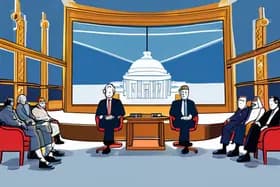
The chief executives of the nation's largest health insurance companies testified before the House on Thursday, attributing rising medical care costs to hospitals and pharmaceutical manufacturers, amid bipartisan concern from lawmakers regarding healthcare affordability. The executives appeared at consecutive House hearings, facing scrutiny from members of both parties who expressed dissatisfaction with the industry's efforts to control expenses.
Congressional representatives criticized the insurers on multiple fronts, including executive compensation and frequent denials or delays in patient care payments. Despite disagreements over the Affordable Care Act's impact on premiums and out-of-pocket costs, both Republicans and Democrats on the panels agreed that insurers had not effectively curbed rising costs.
Representative Jason Smith, Republican from Missouri and chairman of the House Ways and Means Committee, stated, "There is not one single American I have met that believes health insurers are effective at lowering costs." He added that premiums are rising and patients are struggling.
The insurers' attempt to shift blame comes as healthcare costs continue to climb, impacting individuals, families, and the overall economy. According to the Centers for Disease Control and Prevention (CDC), national health expenditures reached $4.3 trillion in 2021, or $12,914 per person. This represents 18.3% of the nation's Gross Domestic Product. The rising costs are driven by factors such as an aging population, advancements in medical technology, and increasing prevalence of chronic diseases.
Dr. Emily Carter, a health policy expert at the Kaiser Family Foundation, noted that while hospitals and drug companies certainly contribute to high costs, insurers also play a role through administrative expenses, marketing, and profit margins. "It's a complex system, and there's no single entity solely responsible," Carter said. "Each stakeholder has levers they can pull to influence costs."
The practical implications for consumers include higher premiums, deductibles, and co-pays, potentially leading to delayed or forgone medical care. A recent study published in the Journal of the American Medical Association found that individuals with high deductible health plans were more likely to postpone necessary medical treatments due to cost concerns.
The hearings concluded without a clear path forward, but lawmakers signaled their intent to continue investigating the factors driving up healthcare costs and exploring potential legislative solutions. Further hearings are expected in the coming months, with a focus on specific pricing practices of hospitals and pharmaceutical companies. The debate over healthcare affordability is likely to continue as policymakers grapple with the challenge of balancing access, quality, and cost.


















Discussion
Join the conversation
Be the first to comment