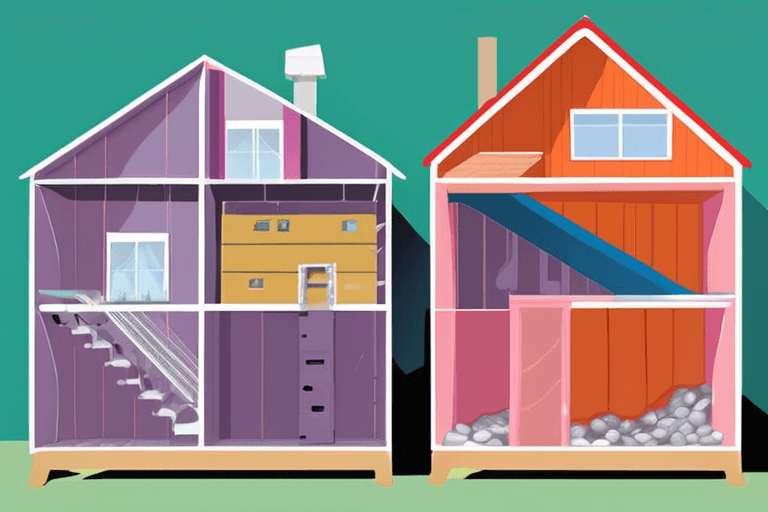
Thousands of people are living in homes that pose a risk to their health and safety following what members of Parliament have described as the "catastrophic failure" of two government insulation schemes. Major defects have been identified in more than 30,000 houses where insulation was installed through government programs since 2022.
The Public Accounts Committee, a parliamentary body that monitors government spending, stated that the "level of non-compliance" by installers warrants investigation for potential fraud and criticized the government's current response as "not credible." The committee specifically pointed to the ECO 4 and GBIS insulation schemes, initiated in 2022, as being fundamentally flawed in their design, suggesting they were almost "bound to fail" due to a lack of oversight from senior government officials.
These schemes, designed to improve energy efficiency and reduce fuel poverty, have instead led to widespread issues such as dampness and mold, jeopardizing the health of residents. The committee's report highlights a significant disconnect between the intended goals of the programs and their actual implementation, raising questions about the effectiveness of government oversight and quality control in large-scale public works projects.
A spokesperson for the Department for Energy Security and Net Zero refuted the claims of widespread health and safety risks, stating that it was "categorically untrue." The spokesperson added that, "for the vast majority, this means a home may not be as energy efficient as it should be." This statement contrasts sharply with the findings of the Public Accounts Committee, which emphasized the severity of the defects and the potential health consequences for affected residents.
The situation underscores the challenges of implementing complex energy efficiency programs and the importance of robust monitoring and enforcement mechanisms. The Public Accounts Committee has called for a thorough investigation into the alleged fraud and a comprehensive review of the government's approach to insulation schemes. The committee's report also raises broader questions about accountability and the need for greater transparency in government-funded initiatives. The next steps will likely involve further scrutiny from parliamentary committees and potential legal action against non-compliant installers, as well as efforts to remediate the affected homes and ensure the safety and well-being of residents.















Discussion
Join the conversation
Be the first to comment