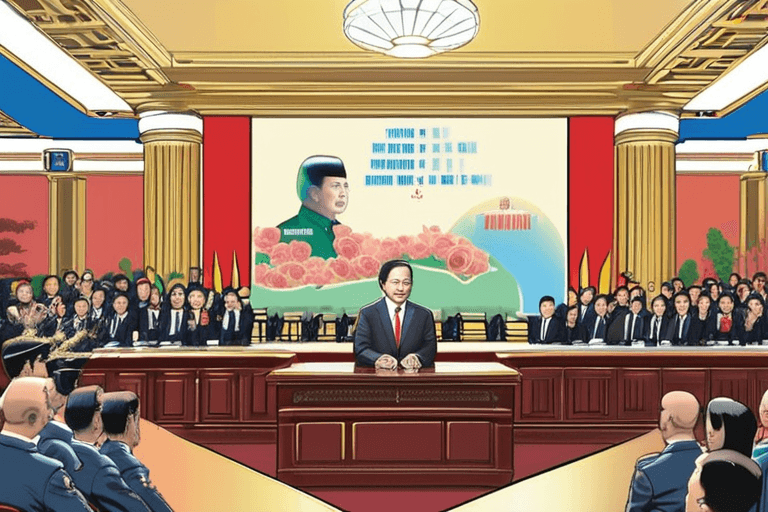
To Lam was re-elected General Secretary of Vietnam's ruling Communist Party on Friday, signaling a potential shift in the country's leadership structure and a renewed focus on economic growth. The reappointment, decided unanimously by the 180-member Central Committee at the conclusion of the National Party Congress in Hanoi, positions Lam, 68, to potentially become the most powerful figure in Vietnam in decades, according to analysts.
While no formal announcement was made regarding the presidency, the composition of the newly elected 19-member Politburo, the party's top decision-making body, suggests Lam will likely assume the role, consolidating power in a way that breaks from Vietnam's tradition of collective leadership. Le Hong Hiep, a fellow at Singapore's ISEAS-Yusof Ishak Institute, stated that the new Politburo's makeup "strongly suggests" Lam's further concentration of power.
Vietnam operates under a unique political system where the General Secretary of the Communist Party holds significant influence, guiding policy and direction for the nation. The potential addition of the presidency to Lam's portfolio would centralize authority, potentially streamlining decision-making processes and accelerating the implementation of economic reforms. Lam pledged to accelerate economic growth during his reappointment. The country is targeting a 10% growth rate.
This shift comes at a time when Vietnam is seeking to further integrate into the global economy, attracting foreign investment and expanding its manufacturing base. The country has emerged as a key player in Southeast Asia, benefiting from supply chain diversification and a growing middle class. However, challenges remain, including bureaucratic hurdles, infrastructure gaps, and the need to improve transparency and governance.
The concentration of power in a single individual could have implications for Vietnam's relationships with other nations. Some observers suggest that a more centralized leadership could lead to a more assertive foreign policy, particularly in the South China Sea. Others believe that stability and clear leadership could enhance Vietnam's attractiveness as a reliable economic partner.
The coming months will be crucial in determining the full extent of Lam's influence and the direction of Vietnam's political and economic trajectory. The international community will be watching closely to see how these changes impact the country's role in regional and global affairs.


















Discussion
Join the conversation
Be the first to comment