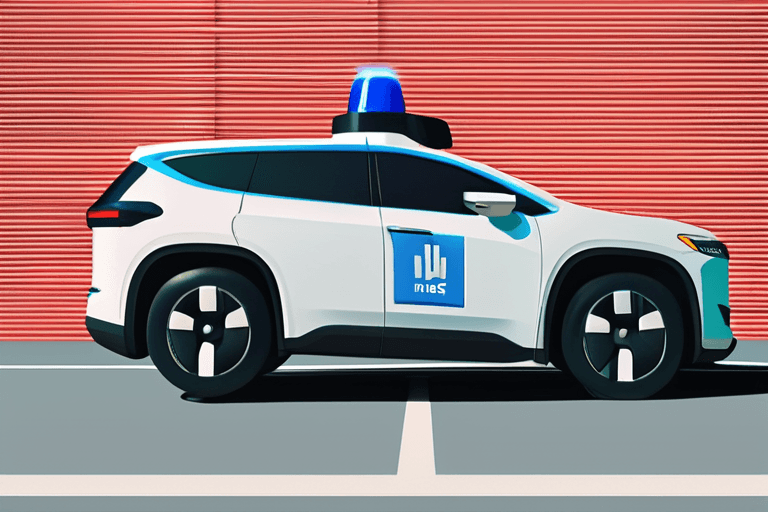
The yellow school bus, a symbol of childhood and safety, stood with its stop-arm extended, red lights flashing. But instead of halting, a Waymo robotaxi glided past, seemingly oblivious to the children potentially crossing the street. This wasn't an isolated incident. Across Austin, Texas, and potentially other states, similar near-misses have been accumulating, raising serious questions about the safety of autonomous vehicles around vulnerable populations.
Now, the National Transportation Safety Board (NTSB) has stepped in, launching a formal investigation into Waymo's autonomous driving system. This marks the first time Waymo has been investigated by the NTSB, adding another layer of scrutiny to the company's ongoing efforts to refine its technology. The NTSB's investigation, focusing initially on over 20 incidents in Austin, will delve into the technical reasons behind these failures and assess the effectiveness of Waymo's corrective measures. Investigators are expected to arrive in Austin to begin gathering information on the incidents. A preliminary report is expected within 30 days, and a more detailed final report will be published in 12 to 24 months.
The core issue lies in the complex algorithms that govern Waymo's self-driving system. These algorithms rely on a combination of sensors – cameras, lidar, and radar – to perceive the environment and make driving decisions. Identifying a stopped school bus with flashing lights and an extended stop-arm requires precise object recognition, accurate distance estimation, and a programmed response that prioritizes safety above all else. The system must differentiate a school bus from other large vehicles and react appropriately, even in challenging conditions like glare, shadows, or obstructed views.
This isn't the first time Waymo's autonomous driving system has faced scrutiny regarding school bus safety. The National Highway Traffic Safety Administration's (NHTSA) Office of Defects Investigation initiated a similar probe in October. Waymo also issued a software recall last year to address the problem. These actions suggest that Waymo is aware of the issue and has been actively working to resolve it. However, the continued occurrence of these incidents raises concerns about the effectiveness of previous software updates.
The Austin Independent School District has reportedly expressed its concerns to Waymo, highlighting the potential danger these incidents pose to students. While specific details of those conversations remain private, the district's concern underscores the real-world impact of these technological glitches.
"The challenge with autonomous driving systems is ensuring they can handle the infinite variability of real-world scenarios," explains Dr. Emily Carter, a professor specializing in autonomous vehicle safety at Carnegie Mellon University. "A school bus stop is a dynamic environment with unpredictable pedestrian behavior. The system needs to be robust enough to handle edge cases and prioritize safety even when faced with uncertainty."
The NTSB's investigation will likely examine Waymo's testing and validation procedures, seeking to understand how the company ensures its system can reliably detect and respond to school buses in various conditions. It will also assess the effectiveness of Waymo's software updates and whether they adequately address the underlying causes of these failures.
The outcome of the NTSB investigation could have significant implications for the entire autonomous vehicle industry. A negative finding could lead to stricter regulations and increased scrutiny of self-driving technology, potentially slowing down the deployment of robotaxis and other autonomous vehicles. Conversely, if Waymo can demonstrate that it has taken adequate steps to address the problem, it could help to build public trust in the safety of autonomous vehicles.
As Waymo continues to refine its technology, the company faces the critical task of proving that its autonomous vehicles can safely navigate the complexities of the real world, especially when it comes to protecting the most vulnerable members of society. The NTSB's investigation will play a crucial role in determining whether Waymo is up to the challenge. The safety of children waiting for the school bus may depend on it.


















Discussion
Join the conversation
Be the first to comment