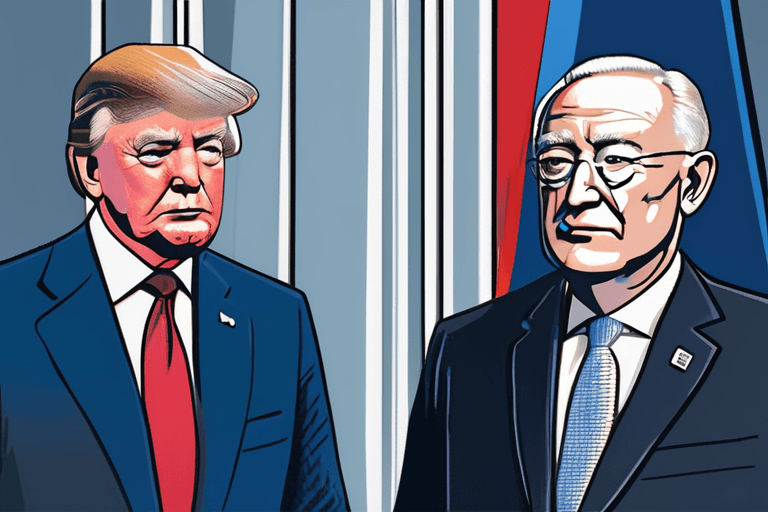
Amidst a backdrop of growing uncertainty regarding the United States' commitment to global leadership, the World Economic Forum in Davos, Switzerland, concluded this week with U.S. allies expressing concerns about a perceived fraying of the established world order. The annual gathering, which brings together political and business leaders, was overshadowed by a series of disruptive statements from President Trump that unsettled global markets and strained relations with key allies.
The diplomatic unease was palpable as discussions ranged from the potential acquisition of Greenland to the ongoing conflict in Gaza. According to sources present at the forum, the President's remarks caused significant volatility in currency markets, with the euro briefly dipping 0.5% against the dollar following comments perceived as critical of European trade policies.
"There's a real sense of anxiety here," said one European diplomat, speaking on condition of anonymity. "We're questioning the predictability of American foreign policy and its impact on the global economy."
The uncertainty surrounding Greenland, in particular, raised eyebrows among attendees. Analysts at Goldman Sachs estimated that the potential economic impact of a U.S. acquisition, while difficult to quantify, could involve investments exceeding $100 billion in infrastructure and resource development.
The forum also addressed concerns about the escalating trade tensions between the U.S. and China. The ongoing tariff war has already impacted global trade flows, with the International Monetary Fund (IMF) projecting a 0.3% reduction in global GDP growth for the current fiscal year. Several CEOs expressed worries about the long-term consequences of these trade disputes on their respective companies' supply chains and profitability.
"We need stability and predictability to make informed investment decisions," stated the CEO of a major multinational corporation, who also requested anonymity. "The current climate of uncertainty is detrimental to business confidence."
Despite the concerns, some attendees remained optimistic about the prospects for international cooperation. "Davos provides a crucial platform for dialogue and collaboration," said Klaus Schwab, founder and executive chairman of the World Economic Forum, in a closing statement. "We must continue to work together to address the challenges facing the world."
The coming months will be crucial in determining the future trajectory of transatlantic relations and the broader global order. Observers are closely watching upcoming meetings between U.S. and European officials, as well as developments in the ongoing trade negotiations with China, for signs of progress or further escalation.















Discussion
Join the conversation
Be the first to comment