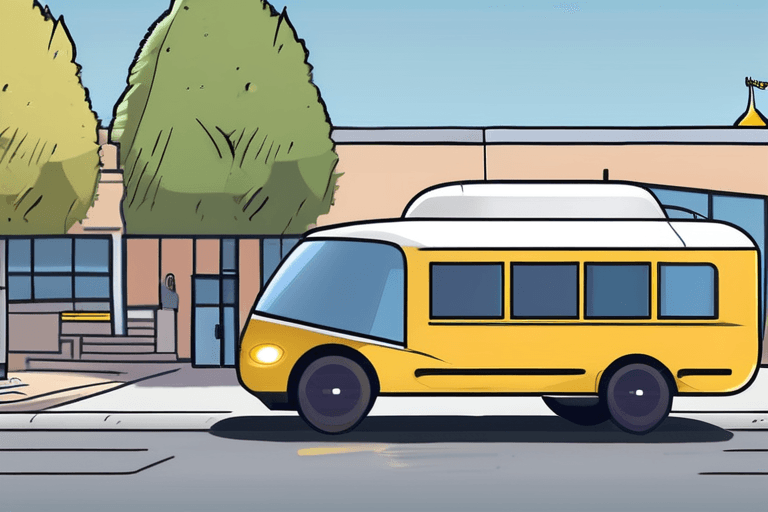
A school bus, its red lights flashing and stop-arm extended, is a universal symbol of caution. Yet, in Austin, Texas, and potentially elsewhere, Waymo's self-driving vehicles have repeatedly failed to heed this warning, prompting a federal investigation that could reshape the future of autonomous driving.
The National Transportation Safety Board (NTSB) announced on Friday that it's launching a probe into Waymo's autonomous driving system after reports surfaced of the vehicles illegally passing stopped school buses. This isn't just a matter of traffic violations; it's a serious safety concern, potentially putting children at risk. The NTSB is focusing on over 20 incidents in Austin, where the local school district has already voiced its concerns. Investigators are heading to the Texas capital to delve into the specifics of each case, with a preliminary report expected within a month and a comprehensive analysis to follow in the next one to two years.
This investigation marks the first time Waymo has been under the NTSB's microscope, but it's not the first time the company's autonomous driving system has been flagged for this specific issue. The National Highway Traffic Safety Administration (NHTSA) initiated a similar investigation in October, and Waymo issued a software recall last year to address the problem. The core issue lies in the complex algorithms that govern how Waymo's vehicles interpret and react to their surroundings. These algorithms rely on a combination of sensors, including cameras, lidar, and radar, to identify objects, predict their movements, and make decisions about how to navigate. In the case of a stopped school bus, the system needs to accurately recognize the bus, identify the flashing lights and extended stop-arm, and then execute a safe and legal stop.
The fact that Waymo has already issued a software recall suggests that the company is aware of the problem and has attempted to fix it. However, the continued incidents indicate that the initial fix was insufficient. This raises questions about the robustness of Waymo's testing procedures and the effectiveness of its software update process. It also highlights the challenges of developing autonomous driving systems that can handle the unpredictable nature of real-world driving scenarios.
"The challenge with autonomous driving is not just about achieving a certain level of accuracy in controlled environments," explains Dr. Emily Carter, a professor of robotics at Stanford University. "It's about ensuring that the system can handle edge cases and unexpected situations with the same level of safety and reliability as a human driver."
The NTSB's investigation will likely focus on several key areas, including the specific algorithms used to detect and respond to school buses, the training data used to develop and validate these algorithms, and the testing procedures used to ensure the safety of the system. The investigation could also examine the role of human oversight in Waymo's operations, including the procedures for remote monitoring and intervention.
The outcome of the NTSB investigation could have significant implications for Waymo and the broader autonomous driving industry. If the NTSB finds that Waymo's system is deficient, it could recommend changes to the company's software, hardware, or operational procedures. It could also lead to stricter regulations for the development and deployment of autonomous vehicles.
Looking ahead, the Waymo investigation serves as a crucial reminder that the pursuit of autonomous driving technology must prioritize safety above all else. As these systems become more prevalent on our roads, it's essential to ensure that they are rigorously tested, thoroughly validated, and continuously monitored to prevent accidents and protect vulnerable road users, especially children. The future of autonomous driving hinges on building public trust, and that trust can only be earned through a commitment to safety and transparency.



















Discussion
Join the conversation
Be the first to comment