Waabi Raises $1 Billion, Partners with Uber for Robotaxi Deployment
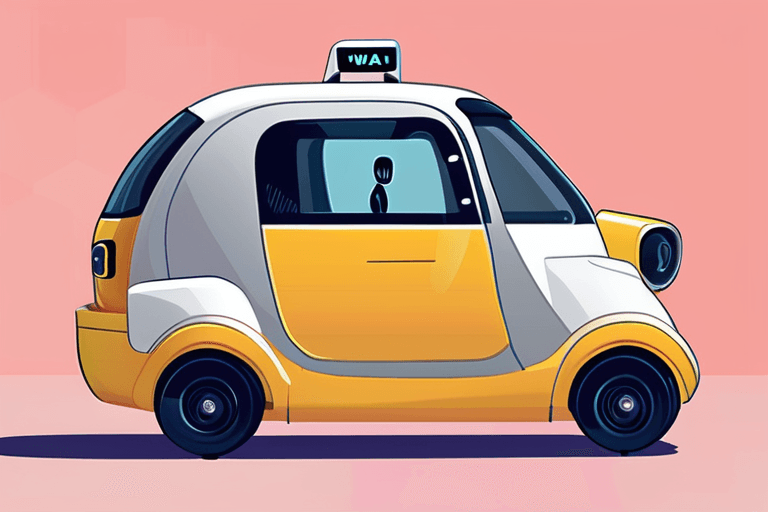
Autonomous vehicle startup Waabi secured $1 billion in funding and announced a partnership with Uber to deploy self-driving cars on the ride-hailing platform, marking its expansion beyond autonomous trucking, according to TechCrunch. The funding includes an oversubscribed $750 million Series C round co-led by Khosla Ventures and G2 Venture Partners, along with approximately $250 million in milestone-based capital from Uber.
The partnership aims to deploy 25,000 or more Waabi Driver-powered robotaxis exclusively on the Uber platform. While the companies did not provide a specific timeline for this large-scale deployment, the collaboration signifies a significant bet on Waabi's AI technology. The partnership represents a belief that the startup's AI technology can succeed where others have struggled, scaling across multiple self-driving verticals with a single technology stack. Competitors like Waymo previously attempted similar expansions.
In other news from the tech sector, Google is expanding its AI-powered learning tools. The company is adding full-length practice tests in Gemini for the Joint Entrance Exam (JEE), India's nationwide engineering exam, TechCrunch reported. Millions of students take the JEE each year to gain admission to top technical institutes. Google stated that Gemini will offer questions based on vetted content from Indian education firms PhysicsWallah and Careers360. This launch follows the recent rollout of similar test-prep tools for the SAT. Gemini will provide immediate feedback, highlighting areas of strength and areas needing further study, and can also explain correct answers and help students generate study plans.
Google is also expanding the reach of its AI-powered photo editing tools. According to TechCrunch, Google Photos is bringing its natural language-based editing feature to Australia, India, and Japan. This feature, initially launched for Pixel 10 users in the U.S. last August, allows users to edit photos using simple text commands instead of manual adjustments. Users in these newly supported countries will see a "Help me Edit" box when they tap the edit option on a photo, allowing them to select from suggested prompts or type their own requests.
Meanwhile, logistics firm Shadowfax experienced a stumble in its market debut. Shares fell as investors weighed concerns about the company's heavy reliance on a few large e-commerce clients, TechCrunch reported. The company raised about ₹19.07 billion (approximately $208.24 million) in its initial public offering. The shares fell about 9% from the offer price of ₹124 to ₹112.60 on Wednesday, valuing the Bengaluru-based logistics firm at roughly ₹64.7 billion (approximately $706.58 million) on debut, roughly matching its last private valuation of close to ₹60 billion (roughly $655.01 million) in early 2025. Founded in 2015, Shadowfax operates as a third-party logistics provider, handling logistics for e-commerce companies.
Finally, ByteDance, TikTok's Chinese parent company, recently established a separate American entity to run the app's U.S. operations, according to TechCrunch. This restructuring aims to separate U.S. TikTok from its Chinese parent, addressing concerns about data privacy and foreign control. The move came after years of pressure from lawmakers, who feared the Chinese government's potential access to Americans' data. In 2024, Congress enacted a law mandating that TikTok's U.S. operations be separated from ByteDance. Under the new structure, about 80% of the U.S. TikTok entity is owned by non-Chinese investors, with ByteDance keeping only a 19.9% share. The newly formed entity, TikTok USDS Joint Venture LLC, licenses TikTok's recommendation algorithm from ByteDance and independently manages content moderation, and oversees data protection.















Discussion
Join the conversation
Be the first to comment