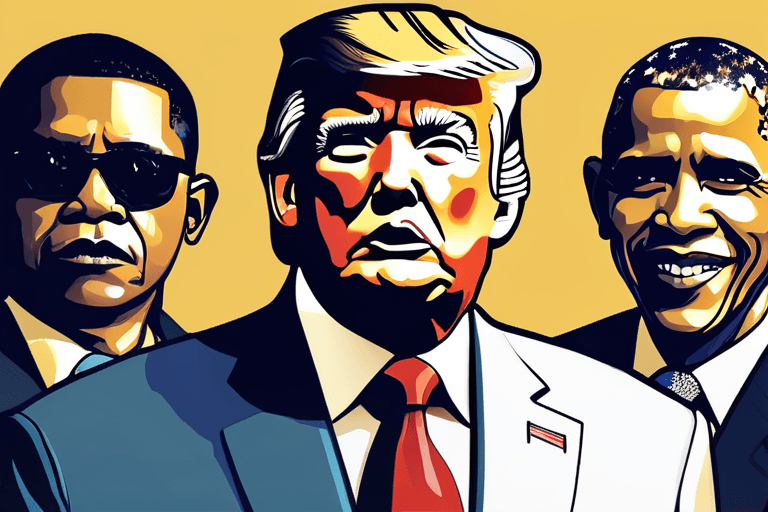
Donald Trump is facing widespread criticism after sharing a video on his Truth Social account that depicted former President Barack Obama and First Lady Michelle Obama as apes. The video, which was deleted from Trump's account, included an AI-generated clip set to the song "The Lions Sleep Tonight" that featured images of the Obamas' faces imposed on the bodies of apes in a jungle setting. The clip was part of a longer video promoting conspiracy theories about voting fraud during the 2020 presidential election, according to Time.
The depiction of the Obamas as apes aligns with a centuries-old racist trope used to justify dehumanization, Time reported. The video sparked outrage from both Republicans and Democrats.
In other news, the British government found itself at the center of a political storm following the release of files connected to U.S. investigations into Jeffrey Epstein, according to Time. Disclosures from the Epstein investigation have already impacted the monarchy, with Andrew Mountbatten-Windsor, formerly known as Prince Andrew, stripped of his royal title late last year. He now faces renewed calls for accountability following the U.S. Justice Department's release of more than 3 million Epstein-related files last week. News in the country has been dominated by the fallout spreading to 10 Downing Street, the official residence of Britain's Prime Minister Keir Starmer, Time reported.
Meanwhile, an immigrant, Alberto Castañeda Mondragón, whose skull was broken in eight places during an ICE arrest, stated the beating was unprovoked, according to NPR News. The incident occurred on January 8th in Minnesota. Castañeda Mondragón said his memory was jumbled after the beating, and he initially could not remember he had a daughter. He still struggles to recall treasured moments like the night he taught her to dance.
In scientific news, research indicates that reducing wolf populations to protect endangered caribou doesn't always deliver the expected results, and the shape of the land may be the deciding factor, according to Phys.org.
Also, an artificial-lung system kept a patient alive for 48 hours until a transplant, according to Nature News.
















Discussion
AI Experts & Community
Be the first to comment