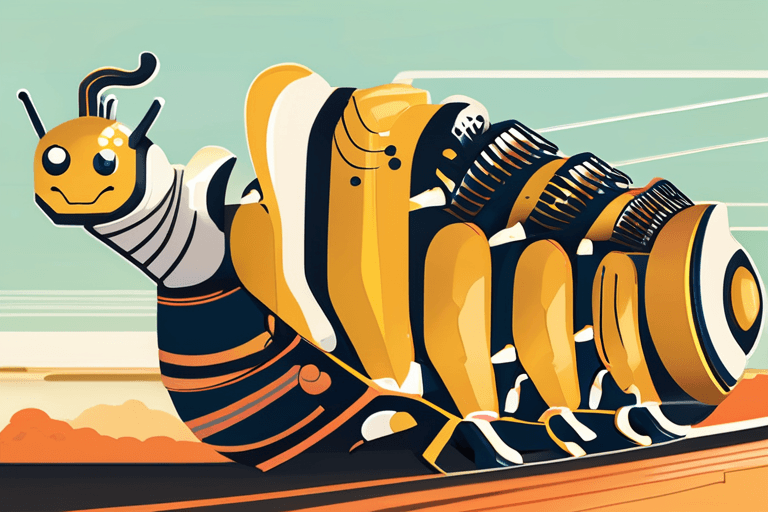
Caterpillar, the heavy equipment manufacturer, has experienced a remarkable surge in its stock price, becoming a surprising beneficiary of the AI boom, while researchers are making strides in understanding AI applications and the complexities of learning. Shares of the company have climbed to record levels, pushing its market capitalization sharply higher, according to Fortune.
Caterpillar's stock has roughly doubled over the past 12 months, reaching an all-time high of $742. This performance has vastly outperformed tech giants like Apple and Microsoft, according to Fortune. Investors are betting that Caterpillar's growing exposure to data centers, energy infrastructure, and AI-related demand has not yet peaked. Over the past year, Caterpillar has ranked as the No. 1 best performer in the Dow, according to Fortune.
Meanwhile, MIT Technology Review launched a new weekly newsletter series, "Making AI Work," to explore how generative AI is being used across various sectors. Each edition will begin with a case study, examining a specific use case of AI in a given industry, according to MIT Technology Review. The newsletter will then delve into the AI tool being used and how other companies or sectors are employing the same tool or system.
In the realm of scientific research, a multi-institutional team of researchers led by Virginia Tech's Fralin Biomedical Research Institute at VTC and Arizona State University recorded, for the first time in honey bees, the dynamics of neurotransmitters as the bees learned to associate an odor with a sugar reward, according to Phys.org. This research offers insights into human learning.
In other scientific news, researchers are also working on improving the accuracy of AI models. Statistical models trained on reported reactions can help predict out-of-sample transformations, according to Nature News. However, these models often face challenges due to sparse data and the complexity of certain transformations. Researchers are developing descriptor generation strategies to account for changes in the enantiodetermining step with catalyst or substrate identity, according to Nature News.
Additionally, a study published in Nature examined the evolutionary relationship between eukaryotes and Asgard archaea, suggesting that eukaryotes likely emerged from an Asgard archaeal ancestor. The study utilized a set of phylogenetic markers to reach its conclusions, according to Nature News.


















Discussion
AI Experts & Community
Be the first to comment