An Islamist party in Bangladesh has become the country's main opposition for the first time in its history, while officials from Russia, Ukraine, and the U.S. are scheduled to meet this week in Geneva to discuss ending the ongoing war. Meanwhile, a United Nations group has yet to begin clearing explosives in Gaza due to a lack of disarmament agreement, and the European Union has barred Chinese research organizations from participating in key research programs.
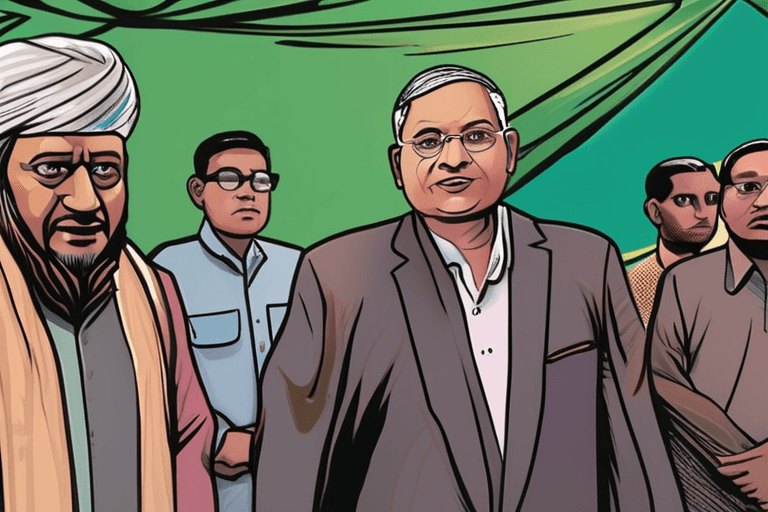
According to NPR, Jamaat-e-Islami's 11-party alliance secured 77 of 300 seats in the recent polls in Bangladesh, marking a significant shift in the nation's political landscape. This development challenges the established dynastic political system, despite ongoing concerns regarding the party's policies, particularly those concerning women.
Simultaneously, as the war in Ukraine approaches its fourth anniversary, officials from Russia, Ukraine, and the U.S. are set to convene in Geneva this week for further discussions aimed at resolving the conflict, as reported by NPR. The exact date and agenda for these talks were not immediately available.
In Gaza, the United Nations group responsible for clearing explosives from conflict zones has not yet commenced major clearing operations. This is because Israel and Hamas have yet to agree on the terms for the disarmament of the territory, according to NPR.
Additionally, the European Union has restricted Chinese research organizations from participating in most research grants funded by Horizon Europe, the EU's 93.5 billion (US$111 billion) research-funding program, as reported by Nature News. The EU cited concerns about sharing sensitive technologies with China that could potentially compromise the region's security. Starting this year, organizations based in or controlled by China are prohibited from applying for grants for projects involving artificial intelligence, telecommunications, health, semiconductors, biotechnology, or quantum technologies.




















AI Experts & Community
Be the first to comment