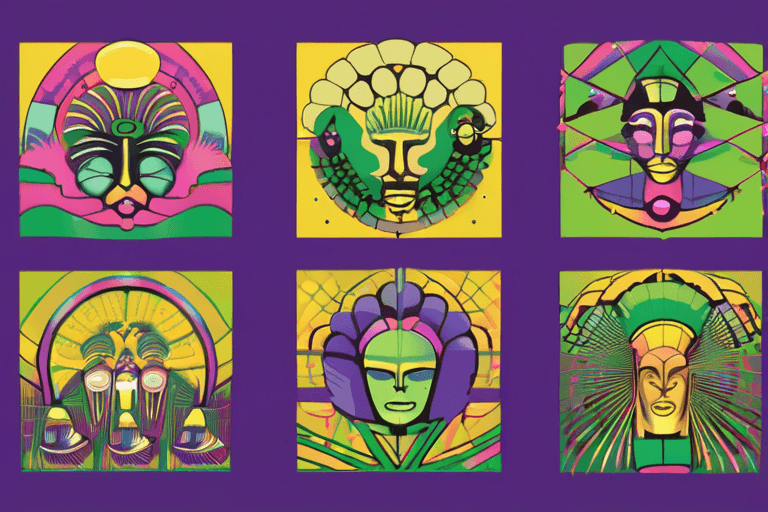
Biodegradable beads made a splash at this year's Mardi Gras, while researchers and developers continue to explore technological advancements. In New Orleans, over 3,000 biodegradable beads were tossed from parade floats, offering a more sustainable alternative to the traditional plastic variety. Meanwhile, discussions around terminal color schemes and the correction of scientific publications highlight ongoing developments in technology and research.
The biodegradable beads, a 3D-printed creation, were developed by a team of researchers at Louisiana State University. This initiative aimed to address the environmental impact of the estimated 25 million pounds of plastic beads discarded annually during the Mardi Gras festivities. In 2018, 46 tons of these beads clogged New Orleans storm drains after heavy flooding, according to Time. Naohiro Kato, a researcher and professor in the university's department of biological sciences, began researching sustainable alternatives to the parade staple.
Simultaneously, the tech world saw discussions on improving terminal color schemes. According to Hacker News, the limitations of base16 themes, which offer only 16 colors, were being addressed. The suggestion was to generate a 256-color palette from existing base16 colors. This approach aims to bridge the gap between the limitations of base16 and the complexities of truecolor, which requires individual theme configurations for each program and can be slower to parse.
In other news, a correction was issued to a Nature article. The original publication, which appeared on January 28, 2026, contained errors in superscript numbers. The correction, published online, addressed these inaccuracies in the "Gi-biased signal transduction of 5-HT2AR" section and the "Ligand recognition mechanism of 5-HT2AR" section.
Further, the use of smartphones in classrooms was examined. A Nature article highlighted the conflict between conventional teaching methods and the reality of students who grew up using digital technologies.
Finally, other developments include GameSir's development of a Windows emulation tool for macOS, designed to allow Mac users to play Windows games, and the U.S. Air Force's repainting of the Air Force One fleet.

















AI Experts & Community
Be the first to comment