Trump Eyes Greenland Amid Economic Struggles
Amidst a backdrop of economic anxieties in Greenland, U.S. President Donald Trump has once again voiced his desire for the United States to acquire the Arctic territory, sparking a wave of controversy


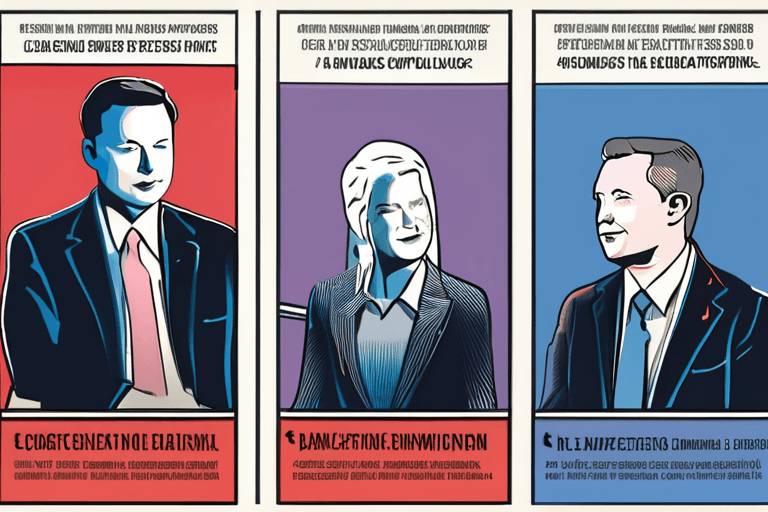
The digital town square, once a battleground perceived to favor the left, now echoes with the clamor of a right seemingly at odds with itself. The catalyst? Elon Musk's acquisition of Twitter, rebranded as X, and the subsequent shift in the platform's content moderation policies. What was initially hailed as a victory for free speech and conservative voices has, according to some observers, inadvertently sown seeds of discord within the right-wing ecosystem.
The story begins in 2022, when Musk finalized his purchase of the social media giant. His stated aim was to restore free speech principles, which he believed had been eroded under previous management. He rolled back content moderation policies, reinstated previously banned accounts, including that of former President Donald Trump, and implemented a subscription service, X Premium, which granted verified status and boosted visibility.
For many conservatives, these changes were a breath of fresh air. They felt vindicated, believing that their voices, often suppressed or censored, were finally being amplified. The platform became a hub for right-leaning commentary, analysis, and activism. Some even credited X with contributing to a broader shift in the cultural landscape, marking what they saw as the end of the "woke era" and the resurgence of conservative values.
However, this newfound dominance has not been without its complications. The absence of strict content moderation has allowed for the proliferation of extreme viewpoints, conspiracy theories, and personal attacks. This has created a more volatile and fractious environment, where infighting and ideological purges have become increasingly common.
"The right is not a monolith," explains Dr. Sarah Miller, a professor of political communication at the University of California, Berkeley. "There are various factions and ideological currents within it, and X has become a space where these tensions are playing out in a very public and often acrimonious way."
One example of this internal conflict is the ongoing debate over the role of populism within the conservative movement. Some argue that populism is essential for connecting with working-class voters and challenging the establishment, while others view it as a dangerous form of demagoguery that undermines traditional conservative principles. These disagreements have played out on X, with prominent figures on the right engaging in heated exchanges and accusing each other of betraying the movement.
Another source of tension is the issue of loyalty to Donald Trump. While Trump remains a dominant force within the Republican Party, there are growing divisions over his leadership and his future role in the conservative movement. These divisions are amplified on X, where Trump's supporters often clash with those who are critical of him or who are exploring alternative candidates.
"X has become an echo chamber for the most extreme voices on the right," says Mark Johnson, a former Republican strategist who now identifies as an independent. "It's a place where people are rewarded for being outrageous and divisive, and that's not healthy for the conservative movement or for the country as a whole."
Musk himself has weighed in on these debates, often using his own account to express his views on political and social issues. While he has generally aligned himself with the right, he has also criticized certain figures and factions within the movement, further fueling the internal divisions.
The long-term consequences of these trends are uncertain. Some observers believe that the infighting on X will ultimately weaken the right, making it more difficult to achieve its political goals. Others argue that these conflicts are a sign of a healthy and vibrant movement, one that is constantly evolving and adapting to new challenges.
"The right is going through a period of intense self-reflection," says Dr. Miller. "It's trying to figure out what it stands for in the 21st century, and that process is inevitably going to be messy and contentious."
Whether X will ultimately serve as a catalyst for right-wing unity or division remains to be seen. But one thing is clear: Elon Musk's experiment in free speech has unleashed a complex and unpredictable dynamic, one that is reshaping the political landscape in ways that few could have anticipated.

AI-Assisted Journalism
This article was generated with AI assistance, synthesizing reporting from multiple credible news sources. Our editorial team reviews AI-generated content for accuracy.
Deep insights powered by AI
Continue exploring
Amidst a backdrop of economic anxieties in Greenland, U.S. President Donald Trump has once again voiced his desire for the United States to acquire the Arctic territory, sparking a wave of controversy


Dell is bringing back its popular XPS laptop line after a brief and unpopular rebranding attempt, signaling a potential shift away from solely focusing on the "AI PC" trend. This revival marks a return to the trusted XPS formula of thin, lightweight designs with modern features, offering consumers a familiar and reliable option in the ultralight laptop market.


A proposal by the FCC to allow prisons to jam cell phone signals to prevent contraband phone use is facing strong opposition from wireless carriers like AT&T and Verizon. These companies argue that jamming technology indiscriminately blocks all signals, including legitimate communications and emergency calls, and that the FCC lacks the authority to authorize such interference. This debate highlights the challenge of balancing security needs with the importance of maintaining reliable communication infrastructure for the public.


Nvidia's CES presentation prioritized AI, foregoing new GeForce GPUs in favor of software enhancements like DLSS 4.5, which improves upscaling with a second-generation transformer model trained on a larger dataset, enhancing image quality, especially in performance modes. The updated DLSS Multi-Frame Generation now supports up to five AI-generated frames per rendered frame, dynamically adjusting the number of generated frames based on scene complexity.


HP's EliteBoard G1a introduces a Windows 11 PC integrated into a membrane keyboard, offering a user-friendly alternative to Raspberry Pi-based keyboard computers. Powered by an AMD Ryzen AI 3 processor, the EliteBoard targets business users seeking a streamlined, accessible computing experience within a familiar form factor.


Motorola is entering the large foldable market with the Razr Fold, a book-style device featuring a 6.6-inch external display and an 8.1-inch 2K internal foldable screen, aiming to compete with Samsung and Google. Launching this summer, the Razr Fold will support the Moto Pen Ultra, differentiating itself through stylus integration, a feature previously seen in earlier Samsung foldable models.

Mobileye is expanding into robotics with the $900 million acquisition of Mentee Robotics, a startup focused on humanoid robots, marking the beginning of "Mobileye 3.0." This move combines Mobileye's expertise in automotive AI and computer vision with Mentee's robotics innovations, potentially leading to advancements in both industries, with the transaction expected to modestly increase Mobileye's operating expenses in 2026.


The "Ralph Wiggum" plugin for Claude Code, named after the Simpsons character, is revolutionizing AI development by employing a brute-force, failure-driven approach to autonomous coding. This methodology, originating from unconventional beginnings, is pushing the boundaries of agentic coding, transforming AI from a collaborative partner into a tireless, self-correcting worker, sparking excitement and debate within the AI community.


The "Art TV" trend, pioneered by Samsung's Frame, is gaining momentum as more manufacturers like Hisense, TCL, LG, and Amazon release TVs designed to display art when not in use, driven by aesthetic preferences and advancements in screen technology. This shift reflects a growing demand for TVs that seamlessly integrate into home decor, particularly in urban environments with smaller living spaces, showcasing how AI and display tech are converging to enhance user experience beyond mere entertainment.


A viral Reddit post alleging fraud at a food delivery app, which gained significant traction across social media, has been revealed as an AI-generated fabrication. The hoax highlights the increasing sophistication of AI in creating believable narratives and raises concerns about the spread of misinformation and its potential impact on public perception of tech companies and labor practices. This incident underscores the need for enhanced verification methods in online spaces to combat AI-driven disinformation campaigns.

A new study projects that the increasing demand for wearable health devices could lead to over a million tons of e-waste by 2050, with the carbon footprint largely stemming from the intensive manufacturing of printed circuit boards. Experts suggest redesigning devices with common metals and modular components to mitigate the environmental impact, emphasizing that small design changes can significantly reduce waste on a global scale.


CES 2026 highlights Nvidia's Rubin architecture, designed to handle the growing computational demands of AI, and its continued efforts to integrate AI into physical systems like autonomous vehicles. The event also features hardware upgrades and AI innovations from companies like AMD and Razer, showcasing AI's central role in shaping future tech.
Discussion
Join the conversation
Be the first to comment