
Entertainment53m ago
Japanese seven eleven

20
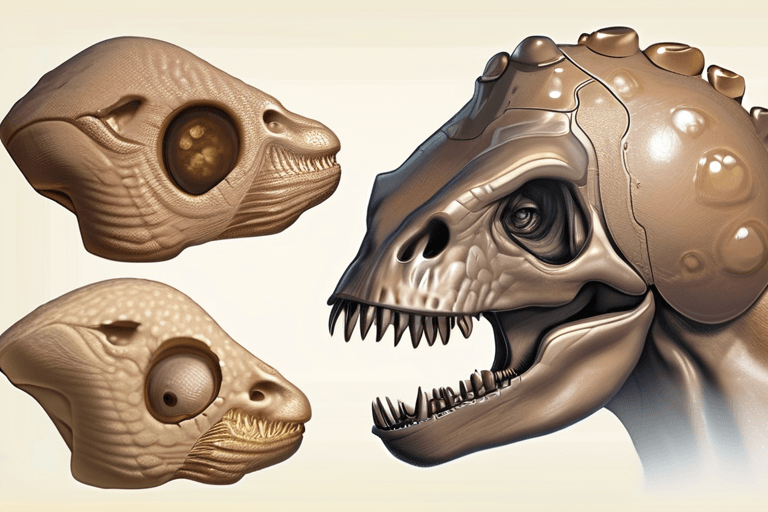
An international research team announced findings that the "Little Foot" fossil, one of the most complete hominin skeletons ever discovered, may represent a previously unknown species of early human ancestor. The research, released Jan. 5, 2026, by La Trobe University in Australia, challenges existing classifications of the fossil and could reshape understandings of human origins and diversity.
The Little Foot skeleton, unearthed in South Africa, has been the subject of intense debate among paleoanthropologists for decades. The new analysis, conducted by researchers from La Trobe University and the University of Cambridge, suggests the fossil's unique combination of features does not align with any recognized Australopithecus species, the genus to which it was previously assigned by some researchers.
"Based on our comparative analysis, Little Foot presents a mosaic of characteristics that sets it apart," said Dr. Imani Silva, lead researcher from La Trobe University. "It's not quite Australopithecus, and it's definitely not Homo. This suggests we are looking at a distinct lineage, a new branch on the human family tree."
The implications of this reclassification are significant for the field of paleoanthropology. The discovery of a new hominin species in South Africa, a region already rich in fossil finds, highlights the complex and diverse nature of human evolution. It also raises questions about the relationships between different hominin groups and their respective contributions to the emergence of modern humans.
The find is particularly relevant to the ongoing debate about the "Out of Africa" theory, which posits that modern humans evolved in Africa before migrating to other parts of the world. While the theory remains widely accepted, discoveries like Little Foot underscore the possibility of more complex evolutionary pathways and the potential for multiple hominin lineages coexisting and interacting in different regions.
The Little Foot fossil was originally discovered in the Sterkfontein Caves, a UNESCO World Heritage Site located near Johannesburg, South Africa. The caves are renowned for their wealth of hominin fossils, including the famous "Mrs. Ples," an Australopithecus africanus skull. The Sterkfontein Caves are part of the "Cradle of Humankind," a region recognized for its exceptional paleontological significance.
Researchers from various institutions around the globe have contributed to the study of Little Foot over the years. The fossil's completeness has allowed for detailed anatomical comparisons, but its fragmented condition and the challenges of extracting it from the surrounding rock have also presented significant hurdles.
"The Little Foot fossil is a testament to the importance of international collaboration in scientific research," said Professor Kenji Tanaka, a paleoanthropologist from the University of Tokyo, who was not directly involved in the study. "The diverse expertise and perspectives brought together by researchers from different countries have been crucial in unlocking the secrets of this remarkable specimen."
The research team plans to conduct further analysis of the Little Foot fossil, including advanced imaging techniques and genetic studies, to gain a more comprehensive understanding of its evolutionary relationships. They also hope to find additional fossils from the same species to further clarify its place in the human family tree. The findings are expected to fuel further research and debate within the scientific community, potentially leading to a revised understanding of human origins.
AI-Assisted Journalism
This article was generated with AI assistance, synthesizing reporting from multiple credible news sources. Our editorial team reviews AI-generated content for accuracy.
Deep insights powered by AI
Continue exploring
Greg Abel's ascent to CEO of Berkshire Hathaway comes with a significant financial reward, signaling the conglomerate's confidence in his leadership as he steps into the shoes of Warren Buffett. Effec
Amidst a backdrop of economic anxieties in Greenland, U.S. President Donald Trump has once again voiced his desire for the United States to acquire the Arctic territory, sparking a wave of controversy

Dell is bringing back its popular XPS laptop line after a brief and unpopular rebranding attempt, signaling a potential shift away from solely focusing on the "AI PC" trend. This revival marks a return to the trusted XPS formula of thin, lightweight designs with modern features, offering consumers a familiar and reliable option in the ultralight laptop market.


A proposal by the FCC to allow prisons to jam cell phone signals to prevent contraband phone use is facing strong opposition from wireless carriers like AT&T and Verizon. These companies argue that jamming technology indiscriminately blocks all signals, including legitimate communications and emergency calls, and that the FCC lacks the authority to authorize such interference. This debate highlights the challenge of balancing security needs with the importance of maintaining reliable communication infrastructure for the public.


Nvidia's CES presentation prioritized AI, foregoing new GeForce GPUs in favor of software enhancements like DLSS 4.5, which improves upscaling with a second-generation transformer model trained on a larger dataset, enhancing image quality, especially in performance modes. The updated DLSS Multi-Frame Generation now supports up to five AI-generated frames per rendered frame, dynamically adjusting the number of generated frames based on scene complexity.
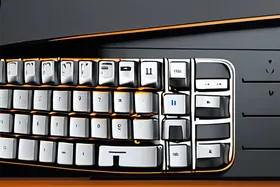
HP's EliteBoard G1a introduces a Windows 11 PC integrated into a membrane keyboard, offering a user-friendly alternative to Raspberry Pi-based keyboard computers. Powered by an AMD Ryzen AI 3 processor, the EliteBoard targets business users seeking a streamlined, accessible computing experience within a familiar form factor.

Motorola is entering the large foldable market with the Razr Fold, a book-style device featuring a 6.6-inch external display and an 8.1-inch 2K internal foldable screen, aiming to compete with Samsung and Google. Launching this summer, the Razr Fold will support the Moto Pen Ultra, differentiating itself through stylus integration, a feature previously seen in earlier Samsung foldable models.


Mobileye is expanding into robotics with the $900 million acquisition of Mentee Robotics, a startup focused on humanoid robots, marking the beginning of "Mobileye 3.0." This move combines Mobileye's expertise in automotive AI and computer vision with Mentee's robotics innovations, potentially leading to advancements in both industries, with the transaction expected to modestly increase Mobileye's operating expenses in 2026.


The "Ralph Wiggum" plugin for Claude Code, named after the Simpsons character, is revolutionizing AI development by employing a brute-force, failure-driven approach to autonomous coding. This methodology, originating from unconventional beginnings, is pushing the boundaries of agentic coding, transforming AI from a collaborative partner into a tireless, self-correcting worker, sparking excitement and debate within the AI community.

The "Art TV" trend, pioneered by Samsung's Frame, is gaining momentum as more manufacturers like Hisense, TCL, LG, and Amazon release TVs designed to display art when not in use, driven by aesthetic preferences and advancements in screen technology. This shift reflects a growing demand for TVs that seamlessly integrate into home decor, particularly in urban environments with smaller living spaces, showcasing how AI and display tech are converging to enhance user experience beyond mere entertainment.
Discussion
Join the conversation
Be the first to comment