Entertainment2h ago
Japanese seven eleven

20

Ars Technica readers donated $42,936.83 to Childs Play and the Electronic Frontier Foundation (EFF) during the 2025 Charity Drive, surpassing last year's total. The donations, tallied after the drive's completion, contribute to a lifetime donation haul of over $585,000 since the Ars Charity Drive began in 2007.
The funds were divided between the two charities, with $19,424.27 going to Childs Play and $23,512.56 to the EFF. According to Ars Technica, the drive saw 474 individual donations, with 272 directed to Childs Play and 202 to the EFF. The average donation was $90.58, with Childs Play averaging $71.41 and the EFF averaging $116.40. The median donation was $50.00.
Childs Play is a charity that provides toys and games to children in hospitals and domestic violence shelters. The Electronic Frontier Foundation is a non-profit organization defending civil liberties in the digital world. Both organizations utilize technology and online platforms to further their respective missions, reflecting the increasing intersection of AI and societal well-being.
The use of AI in charitable giving is becoming more prevalent, with organizations employing AI-powered tools for fundraising, donor engagement, and impact assessment. AI algorithms can analyze donor data to personalize appeals, predict giving patterns, and identify potential new donors. This can lead to increased efficiency and effectiveness in fundraising efforts.
Ars Technica is currently in the process of selecting and notifying winners of the swag giveaway associated with the charity drive.
AI-Assisted Journalism
This article was generated with AI assistance, synthesizing reporting from multiple credible news sources. Our editorial team reviews AI-generated content for accuracy.
Deep insights powered by AI
Continue exploring
Greg Abel's ascent to CEO of Berkshire Hathaway comes with a significant financial reward, signaling the conglomerate's confidence in his leadership as he steps into the shoes of Warren Buffett. Effec
Amidst a backdrop of economic anxieties in Greenland, U.S. President Donald Trump has once again voiced his desire for the United States to acquire the Arctic territory, sparking a wave of controversy

Dell is bringing back its popular XPS laptop line after a brief and unpopular rebranding attempt, signaling a potential shift away from solely focusing on the "AI PC" trend. This revival marks a return to the trusted XPS formula of thin, lightweight designs with modern features, offering consumers a familiar and reliable option in the ultralight laptop market.


A proposal by the FCC to allow prisons to jam cell phone signals to prevent contraband phone use is facing strong opposition from wireless carriers like AT&T and Verizon. These companies argue that jamming technology indiscriminately blocks all signals, including legitimate communications and emergency calls, and that the FCC lacks the authority to authorize such interference. This debate highlights the challenge of balancing security needs with the importance of maintaining reliable communication infrastructure for the public.


Nvidia's CES presentation prioritized AI, foregoing new GeForce GPUs in favor of software enhancements like DLSS 4.5, which improves upscaling with a second-generation transformer model trained on a larger dataset, enhancing image quality, especially in performance modes. The updated DLSS Multi-Frame Generation now supports up to five AI-generated frames per rendered frame, dynamically adjusting the number of generated frames based on scene complexity.
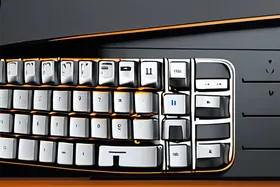
HP's EliteBoard G1a introduces a Windows 11 PC integrated into a membrane keyboard, offering a user-friendly alternative to Raspberry Pi-based keyboard computers. Powered by an AMD Ryzen AI 3 processor, the EliteBoard targets business users seeking a streamlined, accessible computing experience within a familiar form factor.

Motorola is entering the large foldable market with the Razr Fold, a book-style device featuring a 6.6-inch external display and an 8.1-inch 2K internal foldable screen, aiming to compete with Samsung and Google. Launching this summer, the Razr Fold will support the Moto Pen Ultra, differentiating itself through stylus integration, a feature previously seen in earlier Samsung foldable models.


Mobileye is expanding into robotics with the $900 million acquisition of Mentee Robotics, a startup focused on humanoid robots, marking the beginning of "Mobileye 3.0." This move combines Mobileye's expertise in automotive AI and computer vision with Mentee's robotics innovations, potentially leading to advancements in both industries, with the transaction expected to modestly increase Mobileye's operating expenses in 2026.


The "Ralph Wiggum" plugin for Claude Code, named after the Simpsons character, is revolutionizing AI development by employing a brute-force, failure-driven approach to autonomous coding. This methodology, originating from unconventional beginnings, is pushing the boundaries of agentic coding, transforming AI from a collaborative partner into a tireless, self-correcting worker, sparking excitement and debate within the AI community.

The "Art TV" trend, pioneered by Samsung's Frame, is gaining momentum as more manufacturers like Hisense, TCL, LG, and Amazon release TVs designed to display art when not in use, driven by aesthetic preferences and advancements in screen technology. This shift reflects a growing demand for TVs that seamlessly integrate into home decor, particularly in urban environments with smaller living spaces, showcasing how AI and display tech are converging to enhance user experience beyond mere entertainment.
Discussion
Join the conversation
Be the first to comment