Entertainment2h ago
Japanese seven eleven

20

The debate around work-life balance reignited this week following comments from Emma Grede, founder and CEO of Good American and founding partner of Skims, who stated that individuals claiming to have achieved true work-life balance are likely being dishonest. Grede's remarks, made on "The Diary of a CEO" podcast, sparked discussion about the sacrifices often required to attain significant professional success.
Grede emphasized that achieving an "extraordinary life" necessitates extraordinary effort, suggesting that a constant state of high energy and dedication to work is essential. While she acknowledged enjoying leisure time, she implied that even during these moments, successful individuals remain actively engaged in their professional pursuits. Her perspective aligns with a growing sentiment among some high-profile executives who believe that complete separation between work and personal life is unattainable.
The discussion around work-life balance has significant implications for the labor market. A recent study by the Bureau of Labor Statistics indicated that the average American works 40 hours per week, with a median salary of approximately $53,490 per year. While this may provide a comfortable lifestyle for many, Grede's comments suggest that achieving substantial wealth and influence requires a far greater time commitment and dedication, potentially exceeding 60-80 hours per week. This disparity raises questions about the trade-offs individuals are willing to make in pursuit of professional success and the potential impact on their overall well-being.
Good American, co-founded by Khloe Kardashian, has disrupted the denim industry with its inclusive sizing and body-positive messaging. Skims, also co-founded by Kardashian, has achieved significant success in the shapewear and loungewear market, reportedly reaching a valuation of $4 billion in 2022. Grede's involvement in these ventures underscores her business acumen and her ability to identify and capitalize on market trends.
Looking ahead, the conversation surrounding work-life balance is likely to intensify as technology continues to blur the lines between professional and personal lives. The rise of remote work, facilitated by AI-powered tools and communication platforms, has created both opportunities and challenges for individuals seeking to manage their time effectively. While AI can automate certain tasks and improve productivity, it also has the potential to increase workload and create a sense of constant availability. As companies increasingly adopt AI-driven solutions, it will be crucial to consider the impact on employee well-being and to foster a culture that values both productivity and work-life integration.
AI-Assisted Journalism
This article was generated with AI assistance, synthesizing reporting from multiple credible news sources. Our editorial team reviews AI-generated content for accuracy.
Deep insights powered by AI
Continue exploring
Greg Abel's ascent to CEO of Berkshire Hathaway comes with a significant financial reward, signaling the conglomerate's confidence in his leadership as he steps into the shoes of Warren Buffett. Effec
Amidst a backdrop of economic anxieties in Greenland, U.S. President Donald Trump has once again voiced his desire for the United States to acquire the Arctic territory, sparking a wave of controversy

Dell is bringing back its popular XPS laptop line after a brief and unpopular rebranding attempt, signaling a potential shift away from solely focusing on the "AI PC" trend. This revival marks a return to the trusted XPS formula of thin, lightweight designs with modern features, offering consumers a familiar and reliable option in the ultralight laptop market.


A proposal by the FCC to allow prisons to jam cell phone signals to prevent contraband phone use is facing strong opposition from wireless carriers like AT&T and Verizon. These companies argue that jamming technology indiscriminately blocks all signals, including legitimate communications and emergency calls, and that the FCC lacks the authority to authorize such interference. This debate highlights the challenge of balancing security needs with the importance of maintaining reliable communication infrastructure for the public.


Nvidia's CES presentation prioritized AI, foregoing new GeForce GPUs in favor of software enhancements like DLSS 4.5, which improves upscaling with a second-generation transformer model trained on a larger dataset, enhancing image quality, especially in performance modes. The updated DLSS Multi-Frame Generation now supports up to five AI-generated frames per rendered frame, dynamically adjusting the number of generated frames based on scene complexity.
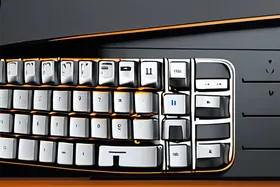
HP's EliteBoard G1a introduces a Windows 11 PC integrated into a membrane keyboard, offering a user-friendly alternative to Raspberry Pi-based keyboard computers. Powered by an AMD Ryzen AI 3 processor, the EliteBoard targets business users seeking a streamlined, accessible computing experience within a familiar form factor.

Motorola is entering the large foldable market with the Razr Fold, a book-style device featuring a 6.6-inch external display and an 8.1-inch 2K internal foldable screen, aiming to compete with Samsung and Google. Launching this summer, the Razr Fold will support the Moto Pen Ultra, differentiating itself through stylus integration, a feature previously seen in earlier Samsung foldable models.


Mobileye is expanding into robotics with the $900 million acquisition of Mentee Robotics, a startup focused on humanoid robots, marking the beginning of "Mobileye 3.0." This move combines Mobileye's expertise in automotive AI and computer vision with Mentee's robotics innovations, potentially leading to advancements in both industries, with the transaction expected to modestly increase Mobileye's operating expenses in 2026.


The "Ralph Wiggum" plugin for Claude Code, named after the Simpsons character, is revolutionizing AI development by employing a brute-force, failure-driven approach to autonomous coding. This methodology, originating from unconventional beginnings, is pushing the boundaries of agentic coding, transforming AI from a collaborative partner into a tireless, self-correcting worker, sparking excitement and debate within the AI community.

The "Art TV" trend, pioneered by Samsung's Frame, is gaining momentum as more manufacturers like Hisense, TCL, LG, and Amazon release TVs designed to display art when not in use, driven by aesthetic preferences and advancements in screen technology. This shift reflects a growing demand for TVs that seamlessly integrate into home decor, particularly in urban environments with smaller living spaces, showcasing how AI and display tech are converging to enhance user experience beyond mere entertainment.
Discussion
Join the conversation
Be the first to comment