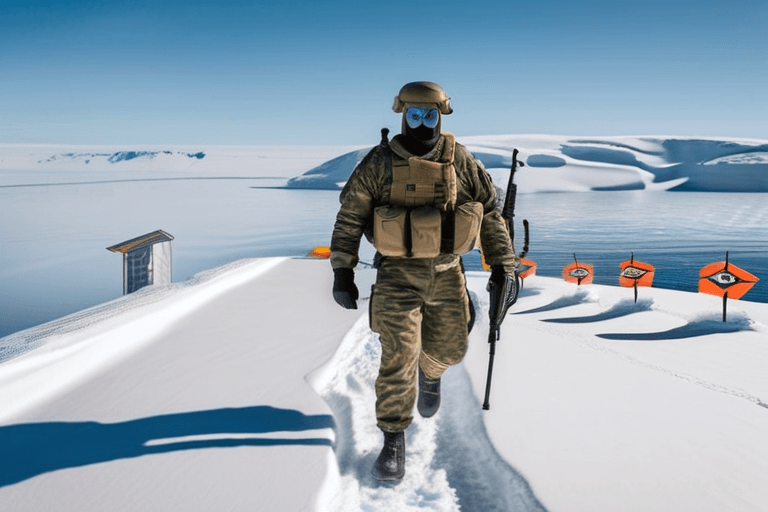
According to French authorities, approximately 15 French soldiers from a mountain infantry unit have already arrived in Nuuk for a military exercise. Germany is scheduled to deploy a reconnaissance team of 13 personnel to Greenland on Thursday, according to the German Defense Ministry.
The deployment follows a meeting in Washington, D.C., on Wednesday between Greenland's Foreign Minister Vivian Motzfeldt, Danish Foreign Minister Lars Løkke Rasmussen, and members of the U.S. Senate Arctic Caucus. The meeting highlighted a divergence in strategic priorities between the U.S. and its European partners regarding the Arctic region.
The increased European military presence in Greenland comes amid growing international interest in the Arctic, driven by climate change, resource exploration, and evolving geopolitical dynamics. The melting ice caps are opening up new shipping routes and access to previously inaccessible natural resources, leading to increased competition among nations with Arctic interests.
While the specific nature of the "fundamental disagreement" between the Trump administration and European allies was not disclosed, it is understood to relate to differing approaches to security and development in the Arctic. European nations have emphasized a multilateral approach, focusing on environmental protection and sustainable development, while the U.S. has prioritized military readiness and resource extraction.
The Danish government, which maintains sovereignty over Greenland, has welcomed the European support. Greenland's strategic location makes it a critical point for monitoring and responding to developments in the Arctic. The arrival of European troops is intended to enhance Greenland's ability to address potential security challenges in the region.
The situation remains fluid, and further deployments from other European countries are expected in the coming weeks. The long-term implications of this increased European military presence in Greenland for the balance of power in the Arctic are yet to be seen.




















Discussion
Join the conversation
Be the first to comment