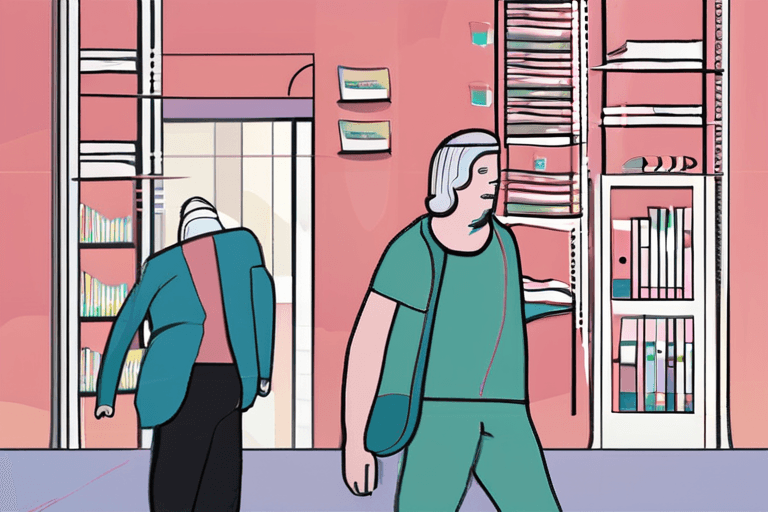
The sterile scent of a doctor's office, the prick of a needle, the rhythmic whir of a dialysis machine – for most, these are sources of dread. But for Julian Barnes, the Booker Prize-winning author, they became a source of… fascination. Diagnosed six years ago with a rare form of blood cancer, Barnes didn't succumb to fear. Instead, he adopted the detached curiosity of a novelist, observing the medical world with an almost clinical eye. This unusual perspective, coupled with a prolific output, has led to a surprising announcement: despite enjoying his current burst of activity, Barnes declares that his latest work, "Departure(s)," will be his last.
Barnes's decision arrives at a time when the very nature of authorship is being questioned. Artificial intelligence, powered by sophisticated algorithms and vast datasets, is increasingly capable of generating text that mimics human writing. From crafting news articles to composing poetry, AI's capabilities are rapidly expanding, raising profound questions about creativity, originality, and the future of the written word.
The announcement comes as Barnes approaches his 80th birthday, a milestone he marks with a flurry of activity. "I can't remember a period of months when there's been so much going on," he admits. This period of intense creativity, fueled in part by his unique perspective on mortality, culminates in "Departure(s)," a work shrouded in mystery but already generating considerable buzz.
Barnes's fascination with the medical world, born from his personal experience, highlights a crucial aspect of human creativity: the ability to find meaning and inspiration in unexpected places. While AI can process information and generate text based on patterns and algorithms, it lacks the lived experience, the emotional depth, and the subjective interpretation that informs human art. As Barnes himself observes, "I love talking to doctors and consultants and nurses. They stick their needles into your arm and take off pints of blood. It's very interesting. Though like mad." This "mad" interest, this willingness to delve into the uncomfortable and the unknown, is precisely what distinguishes human creativity from its artificial counterpart.
The rise of AI in writing also raises ethical considerations. Who owns the copyright to AI-generated text? Can AI truly be considered an author? These are complex questions with no easy answers. As AI models become more sophisticated, the line between human and machine creativity will continue to blur, forcing us to re-evaluate our understanding of authorship and originality.
Ultimately, Julian Barnes's decision to step away from writing, while enjoying a period of intense creativity, serves as a poignant reminder of the human element in art. While AI may be able to mimic style and generate text, it cannot replicate the unique perspective, the emotional depth, and the lived experience that informs human creativity. As we navigate the evolving landscape of AI and authorship, it is crucial to remember the value of human expression and the irreplaceable role of the human voice in shaping our understanding of the world. Barnes's "Departure(s)," whether truly his last or not, stands as a testament to the enduring power of human creativity in an increasingly automated world.















Discussion
Join the conversation
Be the first to comment