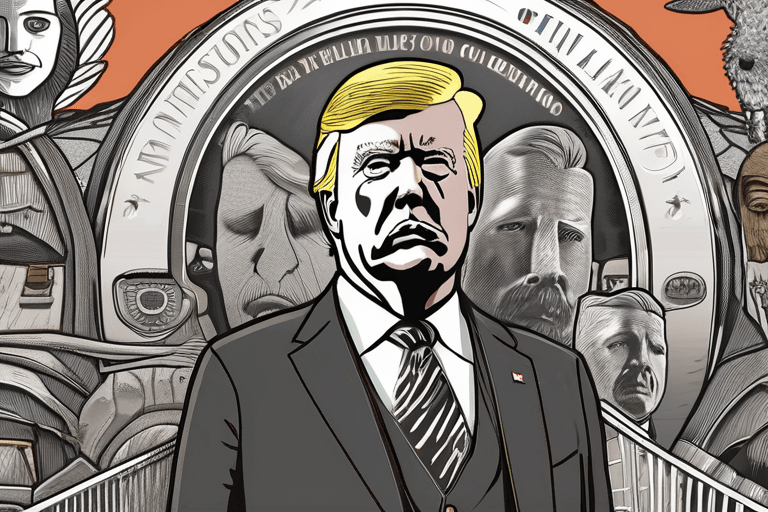
President Donald Trump has invoked historical foreign policy doctrines to justify recent actions, including the capture of Venezuelan President Nicolás Maduro, attempts to acquire Greenland, and threats against Iran. Trump stated at a recent news conference that the capture of Maduro was due to actions that constituted a "gross violation of the core principles of American foreign policy dating back more than two centuries to the Monroe Doctrine."
The Monroe Doctrine, articulated in 1823 by President James Monroe, warned European powers against further colonization or intervention in the Americas. Trump has claimed that the U.S. has "superseded" the Monroe Doctrine, referring to his approach as the "'Donroe Doctrine.'"
These actions and justifications draw parallels to President Theodore Roosevelt's "big stick" diplomacy, a policy that prioritized diplomacy but also emphasized the potential use of military force. Roosevelt's approach, rooted in the idea of "speak softly and carry a big stick," saw the U.S. acting as a hemispheric police power.
Some foreign policy analysts argue that Trump's approach represents a departure from traditional diplomacy, while others contend that it is a continuation of a long-standing American tradition of asserting its interests in the Western Hemisphere. Critics have accused Trump of employing bullying tactics and disregarding international norms. Supporters, however, maintain that his actions are necessary to protect U.S. interests and national security.
The implications of Trump's foreign policy decisions remain to be seen, but they have sparked debate about the role of the U.S. in the world and the legacy of historical doctrines like the Monroe Doctrine. The current status of relations with Venezuela, Greenland, and Iran are uncertain, and future developments will likely depend on ongoing negotiations and political considerations.





















Discussion
Join the conversation
Be the first to comment