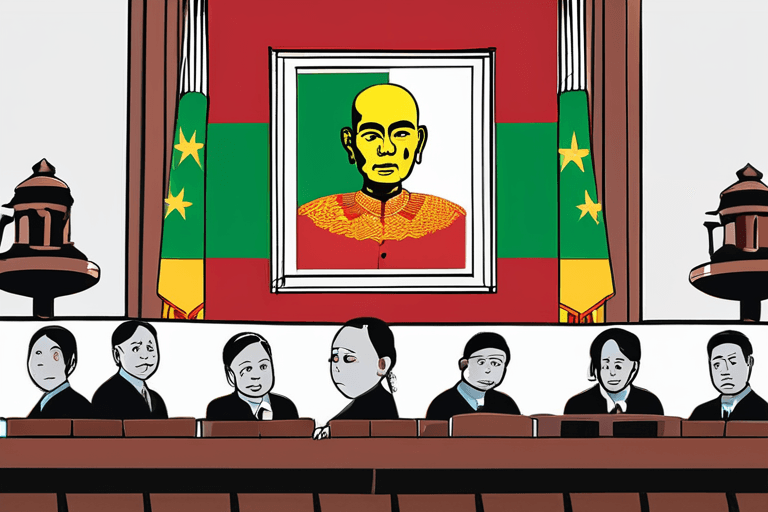
Myanmar began its defense at the International Court of Justice (ICJ) this week, arguing that The Gambia had not provided sufficient evidence to support allegations of genocide against the Rohingya people. The case, brought by The Gambia, centers on a 2017 military crackdown that forced more than 700,000 Rohingya to flee to neighboring Bangladesh.
Ko Ko Hlaing, a representative of the Myanmar government, told judges at the UN's top court that the genocide allegation was "unsubstantiated." His statement followed arguments presented earlier in the week by The Gambia's Foreign Minister Dawda Jallow, who asserted that Myanmar sought to erase the Rohingya minority through "genocidal policies."
The Rohingya are a Muslim ethnic minority who have faced decades of discrimination and persecution in Myanmar, a predominantly Buddhist nation. They have been denied citizenship and many basic rights, rendering them stateless. The 2017 military operation, which Myanmar claims targeted militant threats, has been widely condemned by international organizations as a campaign of ethnic cleansing.
A United Nations report issued in 2018 called for top military figures in Myanmar to be investigated for genocide in Rakhine state, where the Rohingya primarily reside, and for crimes against humanity in other areas. Myanmar has consistently rejected the report's findings.
The ICJ case represents a significant step in holding Myanmar accountable for alleged atrocities against the Rohingya. The court's decisions are binding, but enforcement can be challenging. The proceedings are taking place against the backdrop of ongoing political instability in Myanmar, which has been under military rule since a 2021 coup that ousted the civilian government. The current military junta has rejected the ICJ's jurisdiction in the case. The hearings are expected to continue in the coming days, with both sides presenting further arguments and evidence.





















Discussion
Join the conversation
Be the first to comment