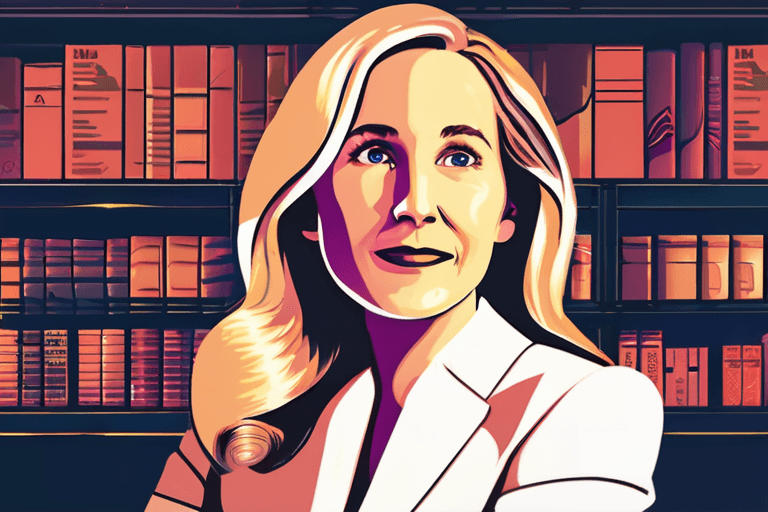
For 75 gubernatorial terms, Virginia's highest office remained a male domain, a streak as unbroken as the formal morning suits donned at each inauguration. But this Saturday, the coattails and top hats give way to a new chapter as Abigail Spanberger prepares to take the helm, shattering a centuries-old glass ceiling. Her election marks not just a personal victory, but a seismic shift in a state steeped in tradition.
Virginia's gubernatorial inaugurations are meticulously choreographed affairs. The state's protocol guide details a precise sequence: the swearing-in on the Capitol steps, the booming 19-gun salute, the roar of a jet flyby slicing through the sky. Then, almost invisibly, the transition: the outgoing governor retreats, and state employees quietly prepare the office for its new occupant. This year, however, the transition is anything but quiet. Spanberger's arrival signals a fundamental change in Virginia's political landscape.
Spanberger's journey to the governor's mansion is a testament to evolving societal norms and the increasing role of artificial intelligence in shaping political campaigns. While traditional methods like rallies and town halls remain important, AI-powered tools are now essential for understanding voter sentiment and tailoring messages.
"AI allows us to analyze vast amounts of data – social media posts, news articles, voting records – to identify key issues and predict voter behavior with unprecedented accuracy," explains Dr. Anya Sharma, a political science professor at Virginia Commonwealth University specializing in AI and political campaigns. "This enables candidates to target specific demographics with personalized messages, increasing their chances of success."
Spanberger's campaign reportedly leveraged AI to identify pockets of untapped support in rural areas, crafting targeted digital ads that addressed local concerns about infrastructure and economic development. This strategic use of AI, combined with her focus on issues like education and healthcare, resonated with voters across the political spectrum.
The implications of AI in politics extend beyond campaign strategy. AI-powered tools can also be used to combat misinformation and detect fraudulent activities, ensuring fair and transparent elections. However, concerns remain about the potential for AI to be used for malicious purposes, such as creating deepfakes or spreading propaganda.
"We need to develop ethical guidelines and regulations to ensure that AI is used responsibly in politics," warns Dr. Sharma. "Otherwise, we risk undermining public trust and eroding the foundations of our democracy."
Spanberger's election is a watershed moment, but it also raises important questions about the future of leadership in an age of rapid technological advancement. As AI continues to transform our world, leaders will need to be not only politically savvy but also technologically literate, capable of understanding and harnessing the power of AI for the benefit of their constituents.
As Virginia prepares to witness history, the focus shifts to the challenges and opportunities that lie ahead. Spanberger's leadership will be tested as she navigates the complex issues facing the state, from economic development to climate change. But one thing is certain: her inauguration marks the beginning of a new era, one where tradition gives way to progress and where the voices of all Virginians are finally heard. The tweaks to the protocol guide are just the beginning.




















Discussion
Join the conversation
Be the first to comment