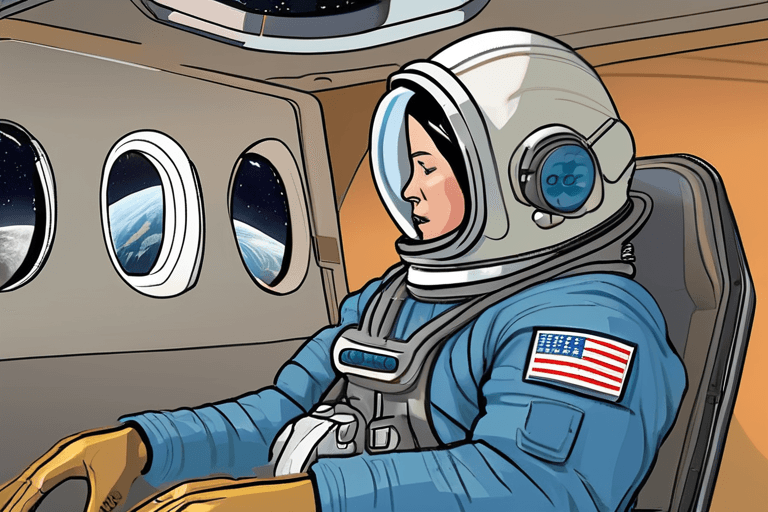
SpaceX Crew-11 splashed down safely in the Pacific Ocean off the coast of Long Beach, California, on Thursday, January 15, 2026, after 167 days in space. The mission, which included NASA astronauts Mike Fincke and Zena Cardman, Roscosmos cosmonaut Oleg Platonov, and JAXA (Japan Aerospace Exploration Agency) astronaut Kimiya Yui, was brought to an early conclusion due to an unspecified medical concern affecting one of the crew members.
NASA officials confirmed that the affected astronaut is currently stable, but declined to release further details regarding the nature of the medical issue, citing privacy concerns. "The health and well-being of our astronauts is always our top priority," said Dr. Eleanor Vance, NASA's Chief Medical Officer, in a released statement. "While we cannot discuss specific medical information, we can confirm that the crew member is receiving the best possible care."
The early return highlights the adaptability of modern space programs and the commitment to astronaut safety. Despite the abbreviated mission, Crew-11 successfully completed over 140 experiments while traveling nearly 71 million miles around Earth aboard the International Space Station. These experiments spanned a range of scientific disciplines, including biology, materials science, and human physiology, with the aim of advancing our understanding of how the human body adapts to long-duration spaceflight and paving the way for future missions to the Moon and Mars.
"Even with the early return, the crew accomplished a significant amount of valuable research," stated Kenichi Tanaka, JAXA's ISS Program Manager. "The data collected will contribute significantly to our understanding of the challenges and opportunities of space exploration."
Medical emergencies in space present unique challenges due to the limited resources and the remote environment. NASA has developed comprehensive medical protocols and training programs to prepare astronauts for a wide range of potential health issues. These protocols include telemedicine consultations with flight surgeons on Earth, onboard medical kits with a variety of medications and equipment, and procedures for emergency medical evacuations.
The incident raises questions about the future of long-duration space missions and the need for enhanced medical capabilities in space. Experts suggest that advancements in areas such as artificial intelligence-powered diagnostics and robotic surgery could play a crucial role in addressing medical challenges during future missions. "As we venture further into space, we need to invest in technologies that can provide astronauts with access to the same level of medical care they would receive on Earth," said Dr. Anya Sharma, a space medicine specialist at the Mayo Clinic.
The affected astronaut is currently undergoing further medical evaluation. NASA has stated that it will conduct a thorough review of the incident to identify any lessons learned and to further refine its medical protocols for future missions. The remaining crew members are reported to be in good health and are undergoing standard post-flight medical assessments.



















Discussion
Join the conversation
Be the first to comment