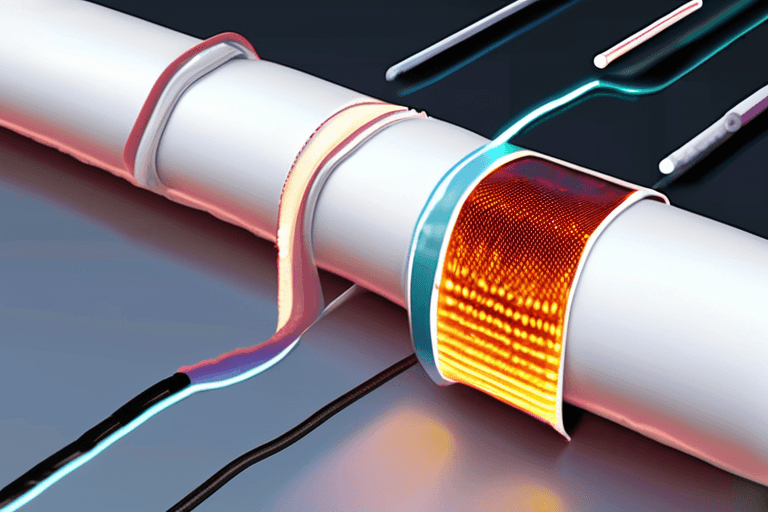
Researchers from Drexel University and Seoul National University announced a breakthrough in stretchable organic light-emitting diode (OLED) technology, potentially paving the way for wearable displays and on-skin health sensors, according to a report released January 15, 2026. The new OLED design overcomes a long-standing limitation of flexible displays by maintaining brightness even when stretched dramatically.
The development hinges on pairing a highly efficient light-emitting material with durable, transparent electrodes made from MXene, a two-dimensional nanomaterial. Tests conducted by the research team demonstrated that the display retained a significant portion of its brightness after repeated stretching. This advancement addresses a critical challenge in the field of flexible electronics, where maintaining performance under strain is paramount.
"This is a significant step forward in the development of truly flexible and wearable electronics," stated a researcher from Drexel University, who wished to remain anonymous due to the sensitive nature of ongoing patent applications. "The combination of high efficiency and stretchability opens up a wide range of possibilities for future applications."
OLED technology is already prevalent in high-end smartphones, curved computer monitors, and modern televisions. However, its application in wearable devices that conform to the skin has been hindered by the fragility of traditional materials. The new stretchable OLED technology could enable the creation of devices that monitor real-time physiological data, such as temperature fluctuations, blood flow patterns, and pressure variations. Such devices could have profound implications for healthcare monitoring, athletic performance tracking, and even augmented reality applications.
The international collaboration between Drexel University in the United States and Seoul National University in South Korea highlights the global nature of materials science research. South Korea, in particular, has invested heavily in the development of flexible display technologies, aiming to maintain its competitive edge in the global electronics market. The research also builds upon previous work exploring the unique properties of MXenes, a class of materials that has garnered significant attention from researchers worldwide due to its exceptional strength, conductivity, and flexibility.
The research team is currently working on improving the durability and longevity of the stretchable OLEDs, as well as exploring methods for mass production. They are also investigating the integration of the technology with other sensors and electronic components to create fully functional wearable systems. The next phase of development will likely involve clinical trials to assess the performance and reliability of the technology in real-world settings.




















Discussion
Join the conversation
Be the first to comment