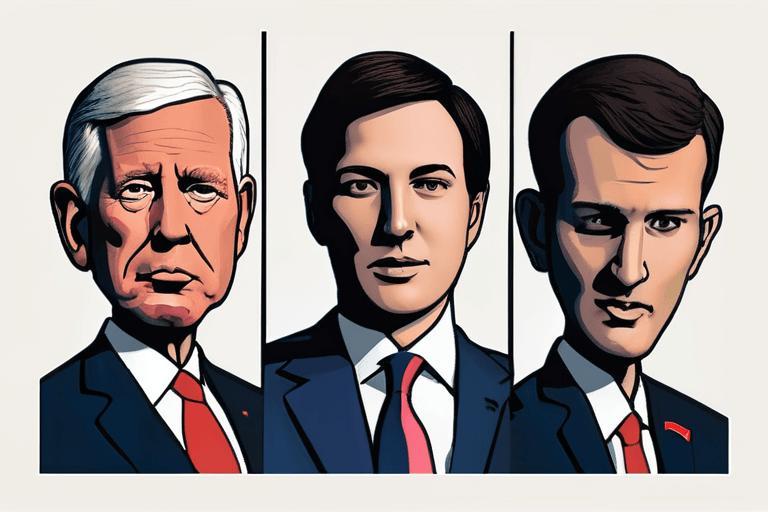
President Donald Trump named former British Prime Minister Tony Blair to his "Board of Peace," which is intended to oversee the president's 20-point plan to end the conflict in Gaza, the White House announced Friday. Blair will serve as a founding executive member alongside Trump's son-in-law Jared Kushner, U.S. Secretary of State Marco Rubio, and U.S. Special Envoy to the Middle East Steve Witkoff, according to the White House.
Other members of the board include Marc Rowan, CEO of Apollo Global Management; World Bank Group President Ajay Banga; and Robert Gabr. The board's creation and composition have already drawn scrutiny, given Blair's controversial history, particularly his support for the U.S.-led invasion of Iraq in 2003.
The "Board of Peace" is tasked with implementing Trump's proposed 20-point plan, the details of which have not been fully disclosed but are expected to address humanitarian aid, reconstruction efforts, and long-term security arrangements in the Gaza Strip. The initiative comes as the conflict between Israel and Palestinian factions continues, with international pressure mounting for a lasting resolution.
The selection of Blair, in particular, has sparked debate. His tenure as Prime Minister was marked by close alignment with U.S. foreign policy, a stance that earned him both praise and condemnation. Critics point to the Iraq War as a major point of contention, arguing that his involvement undermined international stability.
Kushner's inclusion on the board also raises questions, given his previous role in Middle East peace efforts during Trump's first term. Those efforts, while praised by some, were criticized by others for allegedly favoring Israeli interests and failing to address Palestinian concerns adequately.
Secretary of State Rubio's presence on the board signals the administration's commitment to engaging established diplomatic channels. Witkoff's role as special envoy further underscores the importance the U.S. places on finding a resolution to the conflict.
The involvement of figures from the financial sector, such as Rowan and Banga, suggests a focus on economic development and investment as key components of the peace plan. Gabr's specific role has not yet been detailed.
The formation of the Board of Peace represents the latest attempt to broker a lasting peace in the region. The board is expected to convene its first meeting next week to begin outlining its strategy and coordinating with relevant stakeholders. The success of the initiative will likely depend on its ability to navigate the complex political landscape and address the underlying issues fueling the conflict.



















Discussion
Join the conversation
Be the first to comment