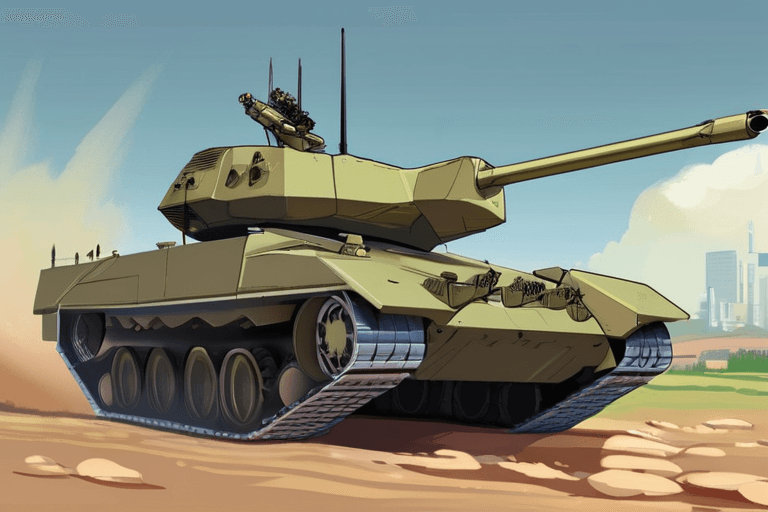
A video released in late October by DeepState, a Ukrainian organization monitoring battlefield developments, showed what military analysts described as a Russian "Frankenstein tank" in southeastern Ukraine, surviving approximately two dozen drone strikes before finally being disabled. The incident, verified by The New York Times, underscores the increasing importance of drones in modern warfare and raises questions about the Russian military's ability to adapt to this evolving technological landscape.
The video depicts a tank encased in roughly welded metal plates, seemingly an attempt to provide additional protection against drone attacks. Despite this improvised armor, the tank ultimately succumbed to a final drone strike, forcing the crew to abandon the vehicle under fire. This event highlights a significant shift in the balance of power on the battlefield, where relatively inexpensive drones can effectively neutralize much more costly and sophisticated weaponry, as well as endanger personnel.
This development is part of a broader trend in the Russia-Ukraine conflict, where Ukraine has increasingly relied on drones for reconnaissance, targeting, and direct attacks against Russian armor and troop positions. The proliferation of drones on the battlefield represents a challenge for traditional military forces, requiring new strategies and technologies to counter this threat. Military analysts suggest that the Russian military has struggled to effectively adapt to the widespread use of drones by Ukrainian forces.
One key challenge is the asymmetry of cost and accessibility. Drones are significantly cheaper to produce and deploy than tanks or other armored vehicles. This allows Ukraine, with support from international partners, to field a large number of drones, overwhelming Russian air defenses and creating a persistent threat to Russian forces. The use of AI in drone technology further exacerbates this issue. AI-powered drones can autonomously identify and track targets, navigate complex environments, and even coordinate attacks in swarms, increasing their effectiveness and reducing the need for human operators.
The implications of this "drone age" extend beyond the immediate conflict in Ukraine. The increasing availability and sophistication of drone technology are transforming warfare, potentially eroding the traditional advantages of large, well-equipped militaries. This shift could lead to a more decentralized and asymmetric battlefield, where smaller, technologically advanced forces can challenge larger adversaries.
The Russian military has reportedly been experimenting with various countermeasures to mitigate the threat posed by drones, including electronic warfare systems designed to jam drone signals, anti-drone guns, and the aforementioned improvised armor on tanks. However, the effectiveness of these measures has been limited, as evidenced by the continued success of Ukrainian drone attacks.
Looking ahead, the development and deployment of counter-drone technologies will likely become a major focus for military forces around the world. This includes not only physical defenses, but also AI-powered systems that can detect, track, and neutralize drones autonomously. The race to adapt to the drone age is ongoing, and the outcome will have profound implications for the future of warfare and international security.















Discussion
Join the conversation
Be the first to comment