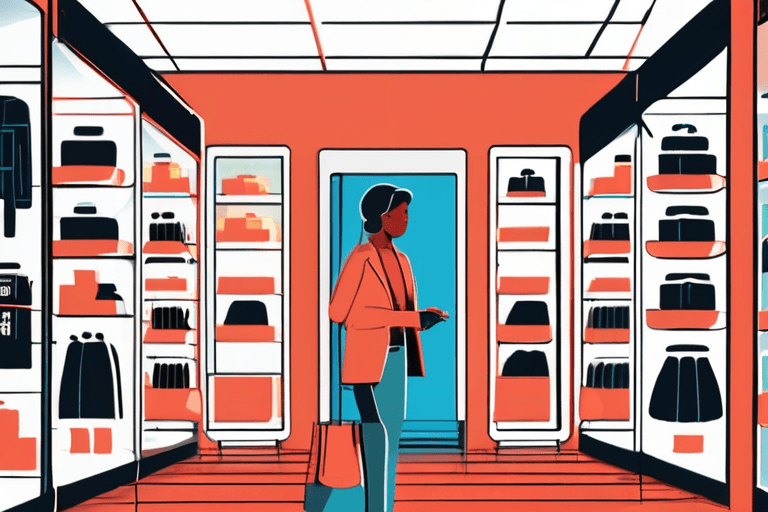
Imagine walking into your favorite store, not to be bombarded by sales pitches, but to be greeted by an invisible assistant who anticipates your needs before you even voice them. This isn't science fiction; it's the vision tech giants are selling to retailers, promising an AI-powered revolution that will reshape how we shop.
Retailers, still reeling from the seismic shift caused by Amazon's rise, are understandably eager to embrace any technology that promises to keep them competitive. From luxury boutiques to agricultural suppliers, businesses are scrambling to integrate artificial intelligence into every facet of their operations. They envision AI-powered chatbots streamlining checkout, algorithms optimizing supply chains, and sophisticated security systems preventing theft. The ambition is vast: to weave AI into the very fabric of the retail experience, from product design to employee recruitment.
This ambition was on full display at the recent National Retail Federation conference in New York. The message was clear: AI is not just a tool, but a fundamental force that will redefine the future of shopping. Walmart's incoming CEO, John Furner, and Google's CEO, Sundar Pichai, took to the stage to announce a partnership aimed at rewriting the rules of retail through AI. They painted a picture of a seamless, AI-driven journey, where algorithms guide consumers from initial product searches to final purchase.
But what does this AI-driven future really look like? At its core, it involves using machine learning to analyze vast amounts of data – customer preferences, purchase history, browsing behavior – to predict what consumers want and deliver it to them with unprecedented efficiency. Imagine an AI-powered inventory management system that anticipates demand fluctuations with pinpoint accuracy, minimizing waste and ensuring shelves are always stocked with the right products. Or consider personalized advertising campaigns, tailored to individual shoppers based on their unique profiles, promising to cut through the noise and deliver relevant offers.
"The potential is enormous," says Dr. Emily Carter, a professor of data science at Stanford University, who studies the impact of AI on consumer behavior. "AI can help retailers optimize every aspect of their business, from pricing and promotions to store layout and staffing. But it also raises important questions about privacy, bias, and the potential for job displacement."
The ethical considerations are significant. As retailers collect more and more data, concerns about privacy and data security inevitably arise. How can retailers ensure that customer data is protected from breaches and misuse? And how can they be transparent about how AI is being used to influence purchasing decisions?
Another concern is the potential for algorithmic bias. AI algorithms are trained on data, and if that data reflects existing societal biases, the algorithms will perpetuate those biases. This could lead to discriminatory outcomes, such as certain demographics being targeted with higher prices or excluded from certain promotions.
The rise of AI in retail also raises questions about the future of work. As AI-powered systems automate tasks previously performed by human employees, there is a risk of job losses, particularly in areas such as customer service and inventory management.
Despite these challenges, the momentum behind AI in retail is undeniable. As technology continues to evolve, retailers will need to navigate the ethical and societal implications of AI while harnessing its potential to create more efficient, personalized, and engaging shopping experiences. The future of retail is undoubtedly intertwined with AI, and the choices we make today will shape the shopping landscape of tomorrow.















Discussion
Join the conversation
Be the first to comment