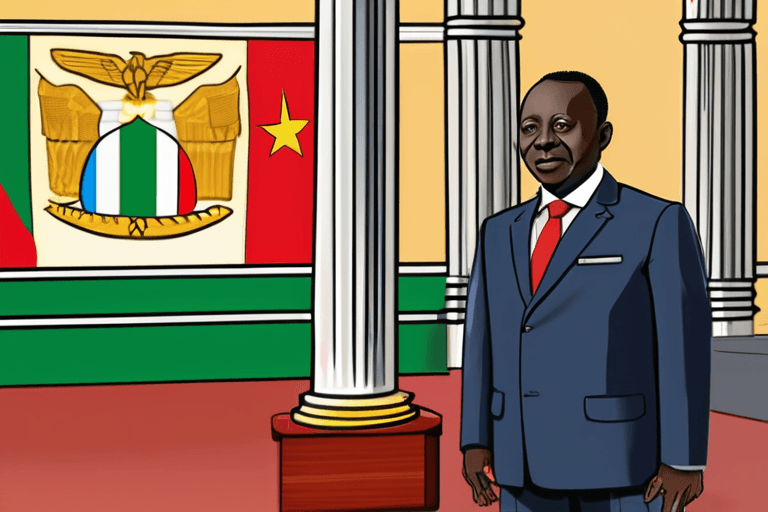
Mamady Doumbouya, the general who spearheaded the 2021 military coup in Guinea, was sworn in as president on Saturday in Conakry. The ceremony, attended by tens of thousands of supporters and several heads of state, followed Doumbouya's victory in last month's election, a vote that marked the first since the military takeover four years prior.
Doumbouya's path to the presidency was marked by controversy. Initially, after seizing power from then-President Alpha Conde, he pledged not to seek the nation's highest office. However, he ultimately entered the race, running against eight other candidates. Several prominent opposition figures remained in exile during the election, and the opposition called for a boycott of the poll, alleging irregularities. The Supreme Court later validated Doumbouya's victory.
The 2021 coup that brought Doumbouya to power stemmed from widespread discontent with Conde's decision to seek a third term, a move critics argued was unconstitutional. Conde had previously overseen constitutional changes that allowed him to bypass the two-term limit. The military takeover was met with both condemnation from international bodies like the Economic Community of West African States (ECOWAS) and support from some segments of the Guinean population who were weary of Conde's rule.
ECOWAS, while condemning the coup, has been working with Guinea's transitional government to facilitate a return to civilian rule. The regional body had imposed sanctions on Guinea following the coup, which were gradually lifted as the transitional government made commitments towards holding elections.
Doumbouya's government has stated its commitment to addressing key issues facing Guinea, including poverty, corruption, and unemployment. His administration has also emphasized the importance of Guinea's mining sector, a major source of revenue, and has sought to renegotiate deals with foreign mining companies to ensure greater benefits for the country. The next steps involve establishing a new government and implementing policies to address the challenges facing the nation, while also navigating the expectations of both the Guinean people and the international community.














Discussion
Join the conversation
Be the first to comment