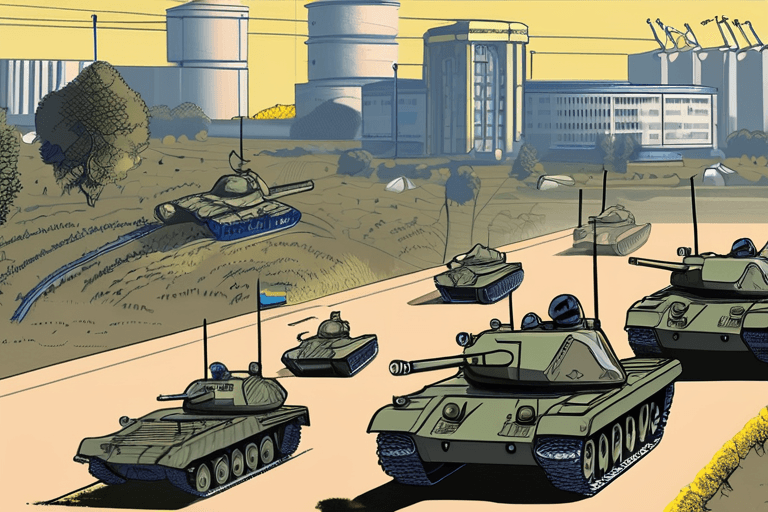
Fighting continued in Ukraine on Sunday, January 18, marking day 1,424 of the conflict, with the Ukrainian military estimating significant Russian losses since the full-scale invasion began in February 2022. According to the General Staff of the Ukrainian military, Russian forces have suffered approximately 1,225,590 personnel losses. The office also reported the destruction of an estimated 11,569 tanks, 23,914 armoured fighting vehicles, 74,601 vehicles and fuel tanks, 36,261 artillery systems, 1,615 multiple launch rocket systems, 1,278 air defence systems, 434 aeroplanes, 347 helicopters, 108,605 drones, 28 ships and boats, and two submarines. These figures, like casualty reports from both sides, have been difficult to independently verify.
Conversely, the Russian TASS news agency, citing the Ministry of Defence in Moscow, reported that Russian forces had captured the settlements of Pryvillya in the Donetsk region and Pryluky in the Zaporizhia region. The ministry further stated that Ukrainian forces lost about 1,305 personnel in these engagements.
The ongoing conflict highlights the increasing role of artificial intelligence (AI) in modern warfare. Both sides are likely employing AI-powered systems for reconnaissance, target identification, and autonomous weapon systems. The use of AI in drones, for example, allows for more precise targeting and reduces the risk to human soldiers. However, the deployment of autonomous weapons raises ethical concerns about accountability and the potential for unintended consequences. As AI technology advances, the line between human and machine decision-making in warfare becomes increasingly blurred, prompting discussions about international regulations and the need for human oversight.
The implications of AI in warfare extend beyond the battlefield. AI algorithms can analyze vast amounts of data to identify patterns and predict enemy movements, providing valuable intelligence to military strategists. However, the reliance on AI-driven analysis also raises concerns about bias and the potential for misinterpretation of data, which could lead to flawed decisions. The development and deployment of AI in military applications also have significant economic implications, driving investment in research and development and creating new industries.
The current status of the conflict remains fluid, with both sides engaged in intense fighting along multiple fronts. The capture of Pryvillya and Pryluky, as reported by Russian sources, suggests a shift in territorial control in certain areas. However, the Ukrainian military continues to resist the Russian advance, relying on a combination of conventional weapons and advanced technologies. The next developments in the conflict will likely depend on a number of factors, including the availability of resources, the effectiveness of military strategies, and the level of international support for both sides. The ongoing war serves as a stark reminder of the complex challenges and ethical dilemmas posed by the increasing integration of AI into military operations.













Discussion
Join the conversation
Be the first to comment