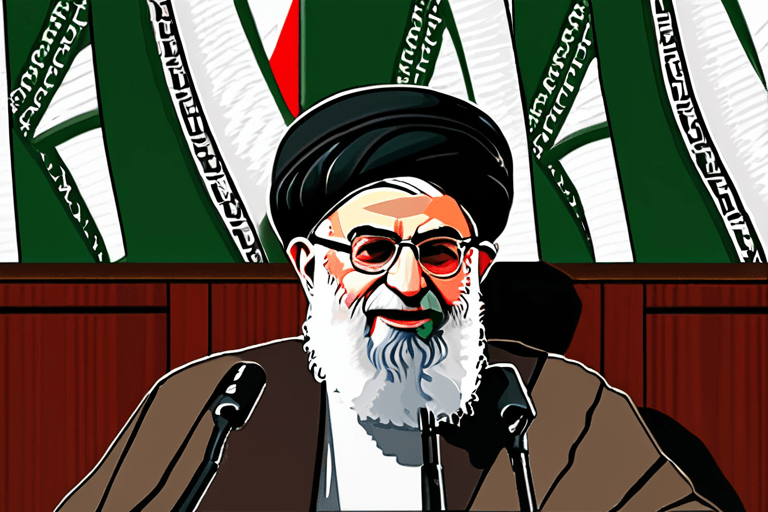
During the 12-day war with Israel and the United States last June, Iran's Supreme Leader Ayatollah Ali Khamenei reportedly retreated to a bunker beneath his compound in Tehran, avoiding public appearances and electronic communication. This action, according to many Iran analysts, reflects Khamenei's 37-year rule over the Islamic Republic, characterized by a static and authoritarian system resistant to change.
Khamenei, 86, has maintained a system built on two primary ideological pillars: the rejection of political or social changes that could weaken the regime's power, and a steadfast hostility toward the United States. Sanam Vakil, the director of the Middle East and North Africa Program at Chatham House, stated, "He is an obstructionist; I do not see him late in life compromising on ideology and his legacy." Vakil added, "Whatever it takes to stay in power down to the last Iranian, he's very keen to keep this system intact, and sees it as an existential and ideological struggle."
The Supreme Leader's approach has been consistent for decades. Over the past 25 years, Iran has experienced recurring nationwide protests, which have become increasingly frequent in recent times. These protests often stem from economic grievances, social restrictions, and a desire for greater political freedoms. However, Khamenei's regime has consistently suppressed these movements, maintaining its grip on power through security forces and control over media and political institutions.
Khamenei assumed the role of Supreme Leader in 1989, following the death of Ayatollah Ruhollah Khomeini, the founder of the Islamic Republic. While Khomeini possessed revolutionary charisma and a more pragmatic approach to foreign policy, Khamenei has been seen as more rigid and ideologically driven. This has led to a more isolationist stance for Iran, particularly in its relations with the West.
The implications of Khamenei's unbending stance are significant for Iranian society and the broader region. Domestically, it means continued restrictions on personal freedoms, limited political participation, and a struggling economy hampered by sanctions and mismanagement. Regionally, it contributes to ongoing tensions and conflicts, particularly through Iran's support for proxy groups in countries like Syria, Lebanon, and Yemen.
Looking ahead, the question of succession looms large. Khamenei's advanced age raises concerns about the future leadership of Iran and the potential for instability. While there are several potential candidates to succeed him, the process is shrouded in secrecy, and the outcome remains uncertain. The next Supreme Leader will likely face immense pressure to address the country's economic challenges, navigate complex regional dynamics, and respond to the growing demands for social and political reform from within Iranian society.



















Discussion
Join the conversation
Be the first to comment