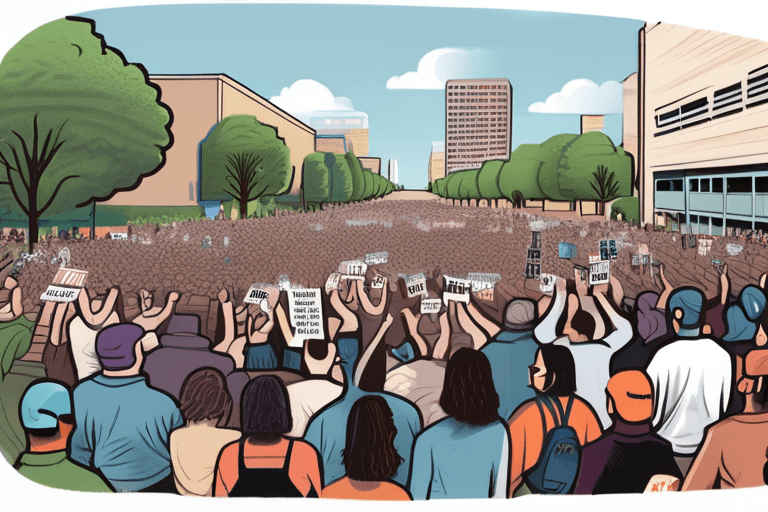
Hundreds of protesters demonstrating against the United States Immigration and Customs Enforcement (ICE) in Minneapolis, Minnesota, on Saturday chased off a small group led by far-right influencer Jake Lang, who had planned a march on a predominantly immigrant neighborhood. The incident occurred near City Hall, where protesters had gathered, waving signs and chanting slogans demanding the removal of ICE and Border Patrol agents from Minneapolis.
Lang, identified as a far-right influencer, had previously announced his intention to march through an immigrant neighborhood, a move that sparked immediate backlash and calls for counter-protests. The protesters, numbering in the hundreds, confronted Lang and his supporters, effectively preventing them from carrying out their planned march. Lang was seen leaving the area clutching his head, according to an Associated Press photograph.
The rally took place amid heightened tensions in Minneapolis following two recent incidents: the killing of Renee Nicole Good, a mother of three, by a federal agent, and the subsequent shooting of a Venezuelan immigrant a week later. These events have fueled public anger and intensified scrutiny of ICE's activities in the city.
The protests in Minneapolis highlight the ongoing debate surrounding immigration enforcement and the role of ICE in communities across the United States. Critics argue that ICE's tactics, including raids and deportations, create fear and distrust, particularly within immigrant communities. Supporters of ICE maintain that the agency is essential for enforcing immigration laws and ensuring national security.
The use of AI in analyzing social media sentiment and predicting potential flashpoints like this one is becoming increasingly prevalent. Natural Language Processing (NLP), a branch of AI, allows algorithms to understand and interpret human language, enabling the identification of trending topics and potential areas of conflict. Law enforcement agencies and community organizations are exploring the use of these technologies to better anticipate and respond to public unrest. However, concerns remain about the potential for bias in AI algorithms and the ethical implications of using these tools for surveillance.
A recent court order placed curbs on ICE agents' actions against protesters in Minnesota, reflecting concerns about potential overreach and violations of civil liberties. The order underscores the legal challenges and public scrutiny that ICE faces in carrying out its mission. The situation in Minneapolis remains tense, with ongoing protests and calls for greater accountability and transparency in immigration enforcement. Further demonstrations are expected in the coming days.



















Discussion
Join the conversation
Be the first to comment