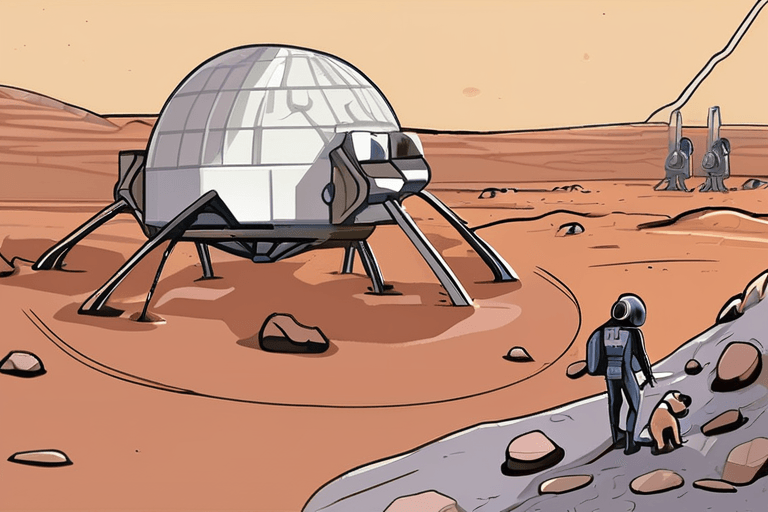
NASA will no longer bring Martian rock samples back to Earth, according to a recent announcement, a decision that has sparked debate within the scientific community about the potential loss of invaluable research opportunities. The change in plans, detailed in the Nature Briefing Podcast on January 16, 2026, means that the samples collected by the Perseverance rover will remain on Mars indefinitely.
The decision stems from budgetary constraints and revised risk assessments, according to sources within NASA. The original Mars Sample Return (MSR) mission, a joint effort with the European Space Agency (ESA), aimed to retrieve the samples for in-depth analysis in terrestrial laboratories, where sophisticated equipment could be used to search for signs of past or present life and to understand the planet's geological history.
"The inability to analyze these samples on Earth represents a significant setback for planetary science," stated Dr. Emily Carter, a leading astrobiologist at the California Institute of Technology, in a statement released shortly after the announcement. "We are losing the chance to employ techniques currently unavailable on Mars, techniques that could potentially revolutionize our understanding of the universe."
In related news, research into the genetics of dogs has shed light on the origins of their floppy ears. A study published in Nature reveals that specific gene variations are responsible for the development of droopy ears in certain breeds. The research team, led by Dr. Alice Thompson at the University of Edinburgh, analyzed the genomes of hundreds of dogs, identifying key regions associated with ear morphology.
"Our findings suggest that the genes influencing ear size and shape were likely targets of artificial selection during the domestication process," explained Dr. Thompson. "Early humans may have favored dogs with more docile temperaments, and these traits could be genetically linked to physical characteristics like floppy ears."
The study highlights the power of genomic analysis in unraveling the evolutionary history of domesticated animals. By comparing the genomes of different dog breeds, scientists can gain insights into the genetic basis of a wide range of traits, from coat color to behavior. This knowledge has implications for understanding the genetic architecture of complex traits in other species, including humans.
The cancellation of the Mars Sample Return mission raises questions about the future of international collaborations in space exploration. While NASA continues to explore alternative strategies for studying Mars, the scientific community is grappling with the implications of this decision. The genetic research on dog ear morphology, on the other hand, demonstrates the ongoing advancements in our understanding of genetics and evolution, driven by sophisticated analytical techniques and collaborative research efforts.


















Discussion
Join the conversation
Be the first to comment