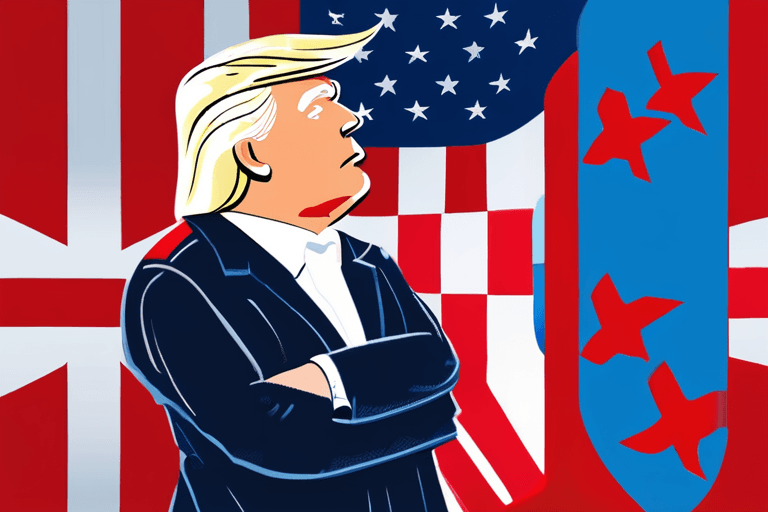
President Donald Trump announced Saturday that he would impose a 10% import tariff on goods from eight European nations, effective February, due to their opposition to American control of Greenland. The affected countries include Denmark, Norway, Sweden, France, Germany, the United Kingdom, the Netherlands, and Finland, according to a social media post by Trump. He further stated that the tariff would increase to 25% on June 1 if an agreement for "the Complete and Total purchase of Greenland" by the United States is not reached.
The tariff announcement represents a significant escalation in the ongoing dispute between Trump and key NATO allies. This action has the potential to further strain the alliance, which has been a cornerstone of security for Europe and North America since 1949. The Republican president has repeatedly expressed interest in acquiring Greenland.
The move has sparked considerable controversy and condemnation from European leaders. Pro-Greenlanders demonstrations took place in Copenhagen, Denmark, on Saturday, reflecting public sentiment against the proposed American acquisition. The Danish government has reportedly urged President Trump to cease threatening to seize Greenland.
The situation highlights the complex geopolitical landscape and the evolving role of artificial intelligence in international relations. AI algorithms are increasingly used to analyze political sentiment, predict potential conflicts, and even draft policy recommendations. However, the use of AI in such sensitive areas raises concerns about bias, transparency, and accountability.
The current standoff also underscores the importance of international cooperation and diplomacy in resolving disputes. The potential economic consequences of the tariffs, coupled with the broader implications for transatlantic relations, necessitate a collaborative approach to finding a mutually acceptable solution.
As of now, the European Union has not issued a formal response to the tariff announcement. The situation remains fluid, and further developments are expected in the coming weeks as negotiations unfold and the February deadline approaches. The potential impact on global trade and security remains a significant concern for policymakers and analysts alike.



















Discussion
Join the conversation
Be the first to comment