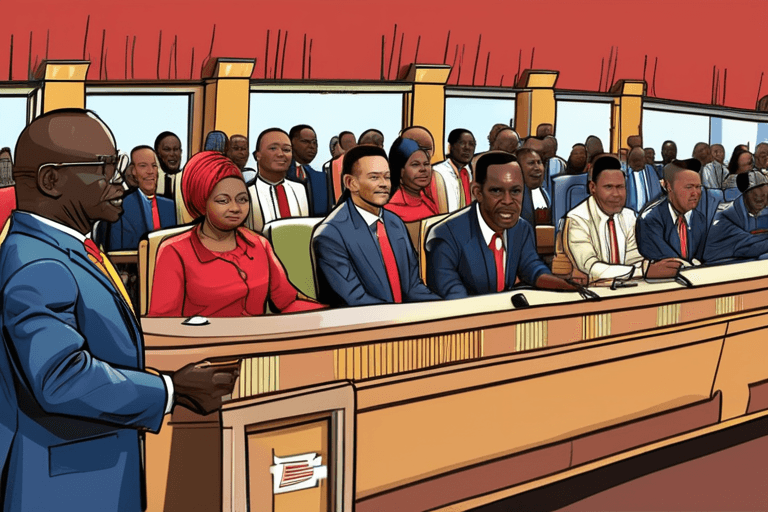
President Patrice Talon's ruling alliance secured complete control of Benin's National Assembly in the legislative elections held on January 11, according to provisional results released by the electoral commission on Saturday night. Of the five parties that participated, only the Progressive Union for Renewal and the Republican Bloc, both aligned with Talon, obtained seats in the assembly.
The Progressive Union for Renewal is slated to hold 60 seats, while the Republican Bloc will have 49. The Democrats, the main opposition party, garnered approximately 16 percent of the vote, failing to meet the threshold stipulated by the new electoral code.
The new electoral code mandates that a party must secure 20 percent of the national vote and 20 percent in each of the 24 electoral districts to qualify for seat allocation. This regulation proved to be a significant hurdle for opposition parties seeking representation.
The outcome of the legislative elections is expected to bolster the presidential bloc's position as the country approaches the presidential election in April. President Talon, who is 67 years old and has governed Benin for the past decade, is constitutionally barred from seeking re-election due to term limits.
The absence of opposition representation in the National Assembly raises concerns about the diversity of voices and perspectives within the government. Critics argue that a strong opposition is crucial for holding the ruling party accountable and ensuring a balanced approach to policy-making. Supporters of the electoral code changes, however, maintain that they are designed to promote stronger, more unified political parties.


















Discussion
Join the conversation
Be the first to comment