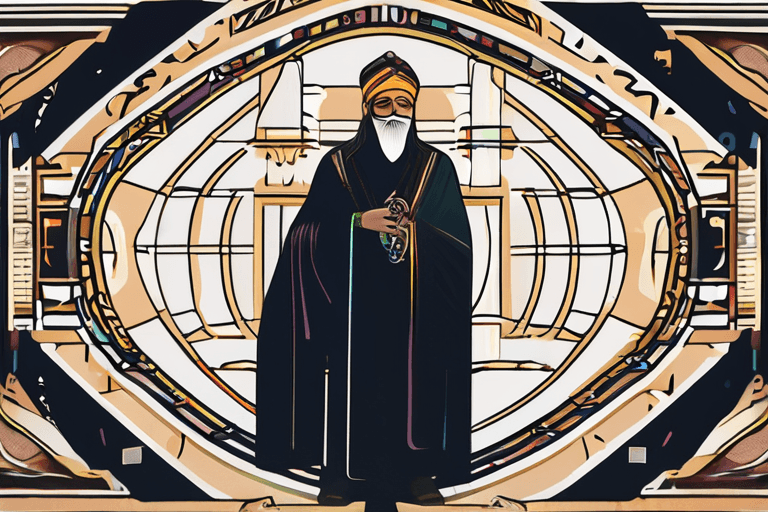
Imagine a world where historical heroes are reborn, not through actors, but through algorithms. That future is closer than you think, thanks to Lens Vault Studios, spearheaded by Ajay and Danish Devgn. The studio has just unveiled "Bal Tanhaji," a generative AI project that reimagines the world of their blockbuster film, "Tanhaji: The Unsung Warrior," and marks a bold step into the uncharted territory of AI-driven entertainment.
But what does it mean to create a film using generative AI? It's more than just slapping a filter on existing footage. Generative AI, at its core, is a type of artificial intelligence capable of creating new content, be it text, images, audio, or even video. Think of it as a digital artist, trained on vast datasets, capable of producing original works based on learned patterns and styles. In the case of "Bal Tanhaji," this technology is being used to expand the "Unsung Warriors" universe, creating new narratives and formats that go beyond the traditional cinematic experience.
Lens Vault Studios' decision to launch with "Bal Tanhaji" speaks volumes about the potential they see in AI. By leveraging the existing popularity and established world of "Tanhaji," they're not just creating content; they're building a story universe designed for multi-platform consumption. This means viewers could potentially experience "Tanhaji" through interactive games, animated series, or even personalized narratives tailored to their preferences, all powered by AI.
The implications of this move are far-reaching. The entertainment industry is on the cusp of a revolution, where AI could democratize content creation, allowing smaller studios and independent artists to compete with established giants. Imagine aspiring filmmakers using AI to generate storyboards, animate characters, or even compose music, all without the need for massive budgets or specialized teams.
However, this technological leap also raises important questions. What about the role of human creativity? Will AI-generated content lack the emotional depth and nuance that comes from human experience? And what about the ethical considerations surrounding AI-generated likenesses and the potential for misuse?
"We see AI as a powerful tool to enhance storytelling, not replace it," says a representative from Lens Vault Studios. "Our goal is to use AI to create new and engaging experiences for our audience, while always ensuring that human creativity remains at the heart of the process."
The development of "Bal Tanhaji" also reflects the latest advancements in AI. Generative adversarial networks (GANs), for example, are likely playing a crucial role. GANs involve two AI models: a generator that creates content and a discriminator that evaluates its authenticity. Through constant competition and refinement, GANs can produce increasingly realistic and compelling results. Similarly, large language models (LLMs) are likely being used to generate dialogue and narrative structures, drawing on vast amounts of text data to create believable and engaging stories.
Looking ahead, the success of "Bal Tanhaji" could pave the way for a new era of entertainment, where AI and human creativity work in tandem to create immersive and personalized experiences. While the ethical and artistic implications are still being debated, one thing is clear: Lens Vault Studios' foray into AI-driven content creation is a significant step towards a future where the lines between reality and artificiality become increasingly blurred. The story of "Bal Tanhaji" is not just about a historical hero; it's about the dawn of a new age in storytelling, powered by the limitless potential of artificial intelligence.














Discussion
Join the conversation
Be the first to comment