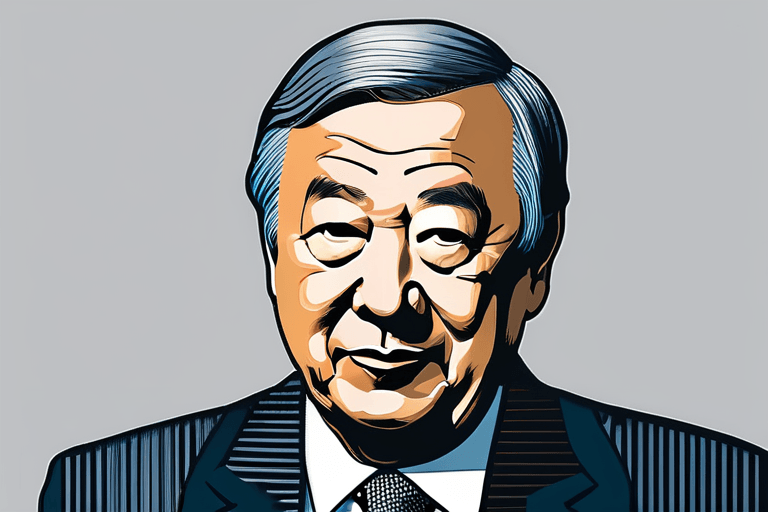
United Nations Secretary-General António Guterres told the BBC that the United States increasingly acts with impunity on the world stage, believing its power supersedes international law. Speaking on BBC Radio 4's "Today" program, Guterres stated that Washington holds a "clear conviction" that multilateral solutions are irrelevant, prioritizing the exercise of its own power and influence, sometimes disregarding international legal norms.
Guterres's remarks come in the wake of recent U.S. actions, including strikes in Venezuela and the seizure of its president, as well as former President Donald Trump's threats to annex Greenland. These actions, according to Guterres, highlight a concerning trend of unilateralism that undermines the foundational principles of the UN, particularly the equality of member states. "The power of law should be replaced by the law of power," Guterres told the BBC, summarizing what he believes is the U.S. perspective.
The United Nations, established in 1945 in the aftermath of World War II, was founded on the principles of collective security, international cooperation, and the sovereign equality of all its members. The UN Charter outlines the framework for international law and diplomacy, aiming to prevent conflict and promote global development. However, the UN's effectiveness has often been challenged by the veto power held by the five permanent members of the Security Council – the United States, Russia, China, France, and the United Kingdom – which allows any of them to block resolutions.
Trump previously voiced strong criticism of the United Nations, questioning its purpose during his address to the General Assembly in September. He asserted that he had "ended seven unendable wars" independently and suggested the UN "did not ev."
The current status of the relationship between the U.S. and the UN remains strained. Guterres's comments reflect a broader concern among many nations about the erosion of multilateralism and the rise of unilateral actions by powerful states. The implications of this shift could weaken international law and cooperation, potentially leading to increased global instability. The UN continues to advocate for a rules-based international order, but its ability to enforce these principles is increasingly challenged by the actions of major powers.












Discussion
Join the conversation
Be the first to comment