Minneapolis Mayor Jacob Frey stated Sunday that deploying active-duty soldiers to Minnesota for immigration enforcement would be unconstitutional and urged protesters to remain peaceful. Frey's comments came as protests continued throughout January in response to increased immigration enforcement in the Twin Cities of Minneapolis and St. Paul, where the Department of Homeland Security deployed over 2,000 federal officers.
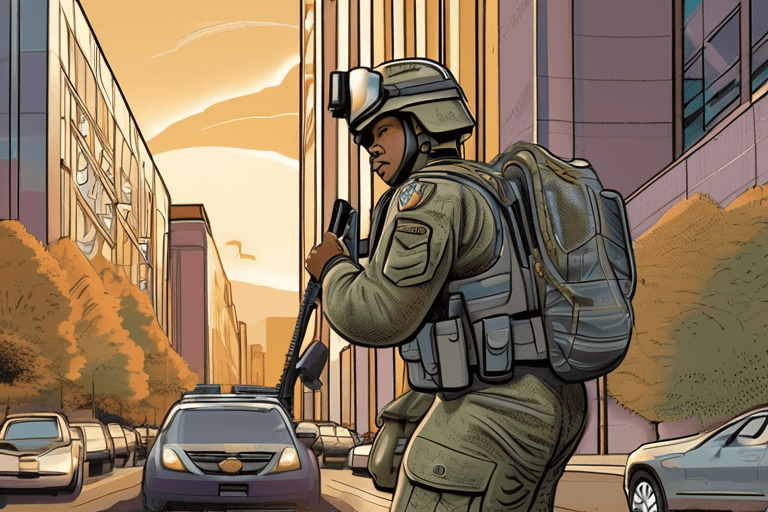
The Pentagon ordered approximately 1,500 active-duty soldiers based in Alaska, specializing in arctic conditions, to be ready for potential deployment to Minnesota, according to two defense officials who spoke on condition of anonymity. These officials indicated that two infantry battalions were placed on alert.
Frey characterized the prospect of military intervention as "not fair, it’s not just, and it’s completely unconstitutional." He emphasized the importance of peaceful protest to prevent the president from perceiving a need for military deployment.
The increased federal presence and potential military involvement raise concerns about the application of AI in surveillance and law enforcement. Facial recognition technology, powered by AI algorithms, is increasingly used to identify individuals in crowds and monitor public spaces. The deployment of federal officers and potential military presence could lead to increased use of such technologies, raising questions about privacy and civil liberties. AI-driven predictive policing algorithms, which analyze historical crime data to forecast future crime locations, could also be used to target specific neighborhoods or communities.
The use of AI in law enforcement is a rapidly evolving field. Recent developments include the deployment of AI-powered body cameras that automatically detect and record potential criminal activity. These technologies offer the potential to improve public safety, but also raise concerns about bias and accountability. AI algorithms are trained on data, and if that data reflects existing biases, the algorithms may perpetuate or amplify those biases.
The protests in Minneapolis and St. Paul reflect broader concerns about immigration enforcement and the role of the federal government. The deployment of federal officers and the potential deployment of active-duty soldiers raise questions about the appropriate balance between national security and individual rights. The use of AI in law enforcement further complicates these issues, requiring careful consideration of the ethical and social implications of these technologies.
Three hotels in the area, reportedly housing Immigration and Customs Enforcement (ICE) officers, stopped accepting reservations Sunday, according to protesters. U.S. postal workers marched through a diverse neighborhood, chanting, "Protect our routes. Get ICE out," reflecting local opposition to the increased immigration enforcement. The situation remains fluid, and further developments are expected as protests continue and the federal government considers its next steps.














Discussion
Join the conversation
Be the first to comment